




July 2026 Fire Report: Releasing the Fire Rover Performance Dashboard — A Mid-Year Look
As published in Waste360, where it was the top story of the week for July 27 to 30.
Every month, this waste and recycling fire report tracks industry incident data to show operators where risk is moving. The July 2026 edition covers June incidents and releases the first half of the Fire Rover Performance Dashboard, a five-year view of how detection and suppression systems performed in the field.
June 2026 by the Numbers: 38 Publicly Reported Incidents
June closed out the first half of the year the way most of 2026 has gone so far: elevated, but this time close to normal. We recorded 38 publicly reported incidents in June — modestly below the 2016–2025 June average of 39.2, and a clear step down from May’s 40. Of those 38 events:
- 19 occurred at waste, paper, and plastics facilities
- 12 at metal recycling yards
- 4 at construction and demolition facilities
- 2 at organics facilities
- 1 at a rubber facility
Unlike May, which saw an unusual flip toward metals, June returned to the industry’s traditional pattern almost exactly on the nose: waste, paper, and plastics accounted for 50.0% of incidents (in line with the historical share of just under half), and scrap metals landed at 31.6%, right on top of its typical 32% share. After May’s anomaly, June is a reminder that the underlying pattern hasn’t changed. It just took a month off.
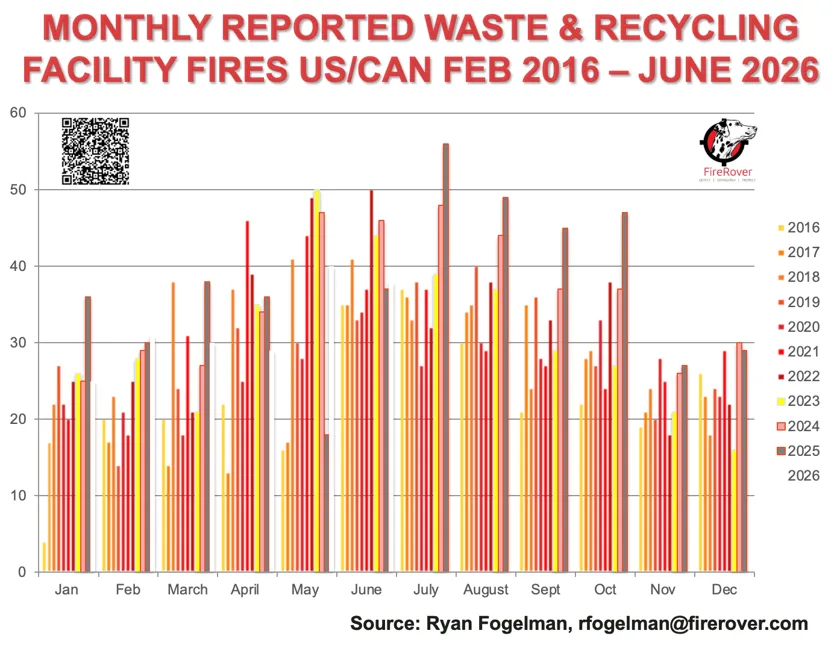
As always, these are only the publicly reported incidents this waste and recycling fire report tracks. Actual incident totals across the industry are estimated at roughly 6X higher than what makes it into news reports and public databases.
Inside the First Half of the 2026 Waste and Recycling Fire Report
Zooming out to the full first half of the year, the industry logged 193 publicly reported incidents through June, essentially the same elevated pace this waste and recycling fire report has tracked since 2020. Here’s how the first six months break down by material category, measured against the 2016–2025 historical baseline:
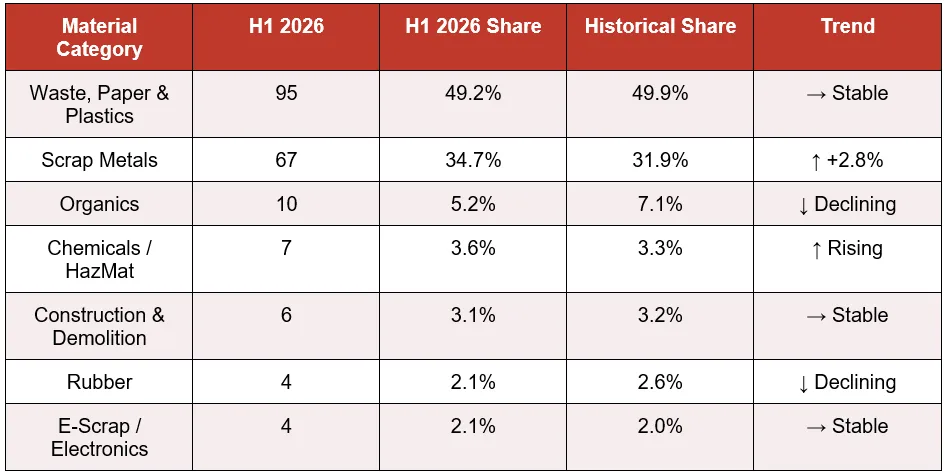
Metals is still the category to watch, up nearly 3 points of share versus its ten-year historical baseline, consistent with the trend this waste and recycling fire report flagged last month. Chemicals/HazMat is small in absolute terms but continues to creep upward, which lines up with the growing presence of batteries and energy-storage materials across more parts of the waste stream.
How Should C&D Operations Prevent and Respond to Fires?
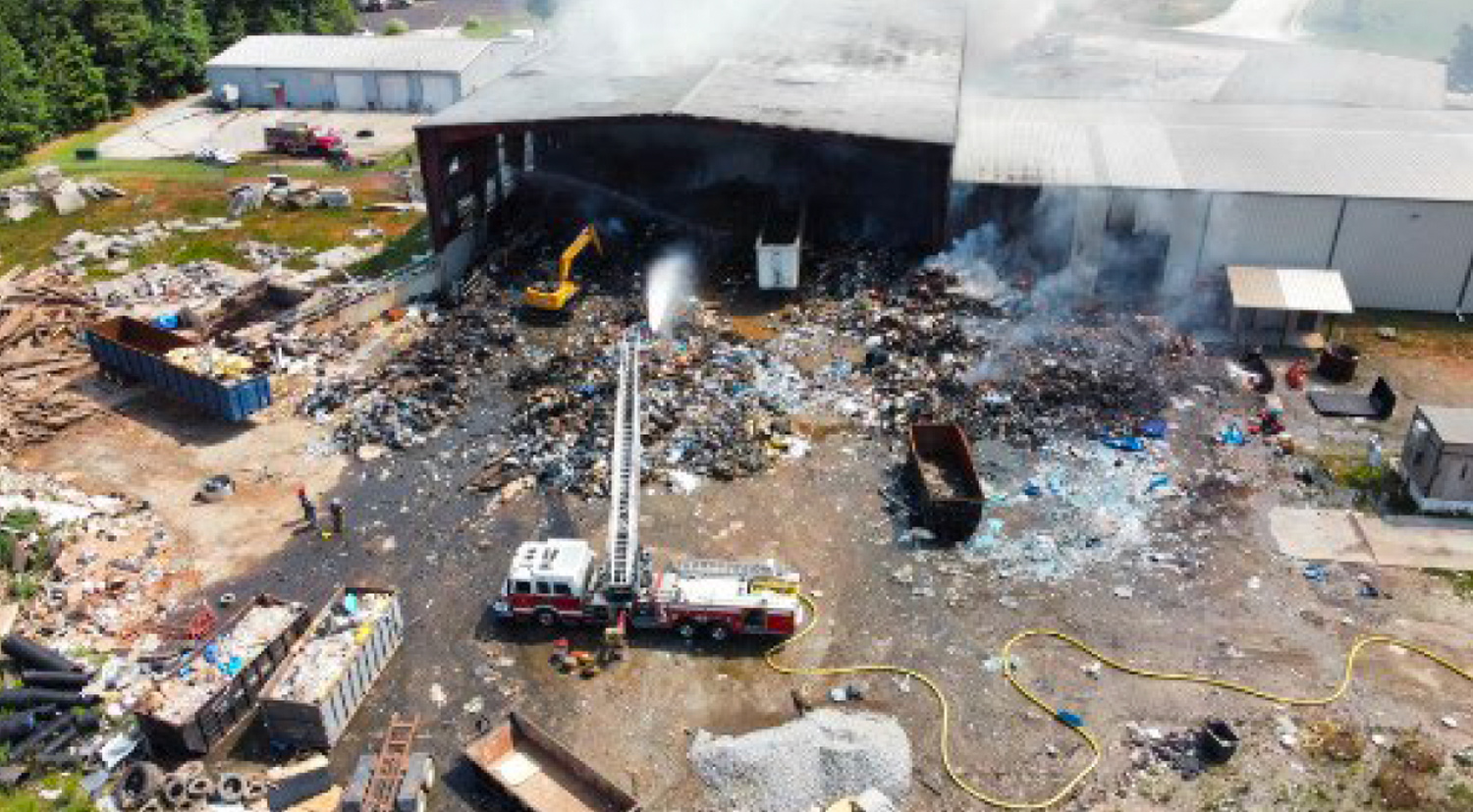
June’s C&D spike is one of the few places this waste and recycling fire report saw real movement this month, and it is worth pausing on. Construction and demolition operations carry a fire risk profile that’s genuinely different from a typical MRF or transfer station: large outdoor stockpiles, mixed and often unknown fuel loads, and material that can smolder deep inside a pile long before it’s visible from the surface. A few practices consistently separate operators who catch these events early from operators who don’t:
- Monitor stockpiles for fire characteristics, rather than volume alone. Temperature and smoldering behavior change well before flames are visible.
- Keep piles separated and sized so a fire in one section can’t easily spread to the next.
- Establish a command center and a written incident plan before an event happens, not during one.
- Require air monitoring equipment for anyone working in or near an affected area.
- Attack piles from an upwind position whenever possible and rely on radios once visibility drops.
- Plan for water and runoff control in advance. A C&D fire response can flood a yard and needs drainage and containment thought through ahead of time.
None of this eliminates the risk entirely. Even the best-run C&D operations still catch fires. But the operators I see recover fastest are the ones who planned, trained, and equipped their teams before the incident, not during it. I go deeper on this in a piece I wrote on fire prevention and response best practices for C&D operations with the help of David Davito and Resource Waste and Jim Emerson from Starr Risk Insurance that those in the industry might find helpful.
A Major Release: The Fire Rover Performance Dashboard, 2022–2026
Every year I publish industry-wide fire data pulled from public reporting. But that only tells half the story. This waste and recycling fire report tells you how often facilities are catching fire. It doesn’t tell you how well the technology protecting them is performing when something starts to burn.
That’s why I’m excited to release the first half of our 2026 Fire Rover Performance Dashboard: a five-year look (2022 through the first six months of 2026) at what our systems are actually seeing and doing in the field: actionable fires and hotspots detected, system pressurizations, fire suppression activations, fire department dispatches, and major losses across our protected sites.
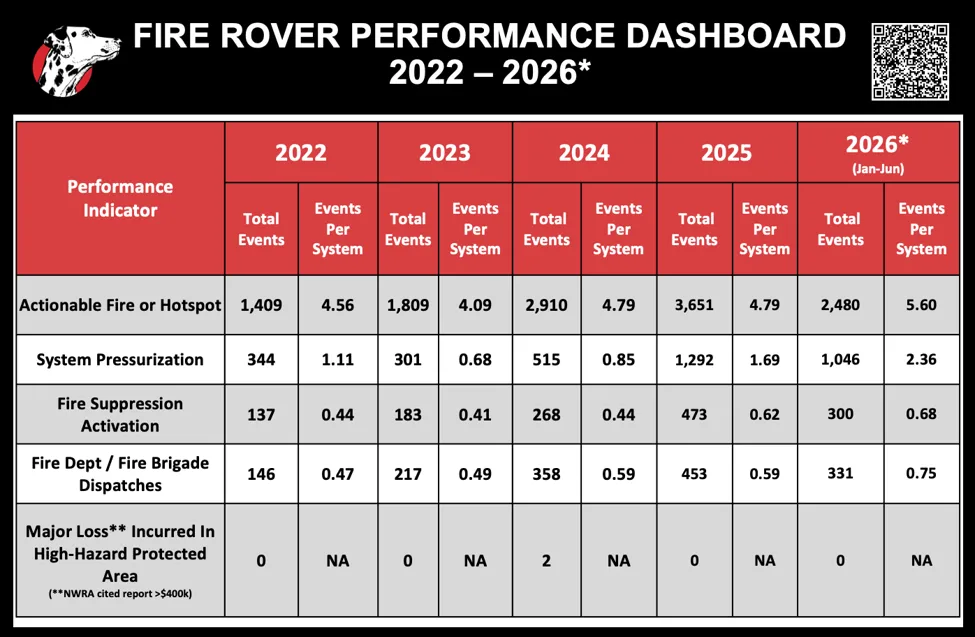
A few numbers jump off this table immediately.
Through just the first half of 2026, our systems logged 2,480 actionable fire or hotspot events — a rate of 5.60 events per system. That per-system rate is already the highest of any year on this dashboard, full year or partial, surpassing 2024 and 2025’s identical 4.79 rate, and well above 2022’s 4.56 and 2023’s 4.09.
Put another way: in six months, our systems are detecting actionable fire and hotspot activity at a pace roughly 17% higher, per system, than we saw across all of 2024 or 2025 combined.
System Pressurizations and Suppression Activity Are Climbing Fast
System pressurization events, meaning events where a Fire Rover system charges its suppression line in response to a detected threat — hit 1,046 events in H1 2026 alone, a rate of 2.36 per system. That already exceeds the full-year 2025 rate of 1.69 per system, and it’s more than double the 2024 full-year rate of 0.85.
Fire suppression activations followed the same trajectory: 300 events through June, a 0.68 per-system rate that has already surpassed all of 2025’s 0.62 full-year rate — in half the time.
Fire department and fire brigade dispatches tell the same story: 331 dispatches in H1 2026 (0.75 per system) compared to 453 for the full year 2025 (0.59 per system). We are on pace to meaningfully exceed last year’s dispatch volume.
Zero Major Losses, Again
Perhaps the most important number on this entire dashboard, and the one this waste and recycling fire report will keep returning to, is the one that stayed at zero: major losses (NWRA-cited, exceeding $400K) in high-hazard protected areas through the first half of 2026. Major losses stood at zero across 2022, 2023, and 2025, with 2024 the lone exception at two incidents. As detection and pressurization events climb, the fact that major losses remain flat at zero is the clearest evidence that early detection paired with human-verified suppression is doing exactly what it’s designed to do: catching events before they become catastrophic and properly fighting large incidents and/or explosions to ensure the most efficient and effective fire response.
What Waste and Recycling Fire Report Tells Us
Taken together, this dashboard confirms what the public incident data in this waste and recycling fire report has been telling us all year: 2026 is a genuinely active year for fire activity in waste and recycling facilities. But it also tells a second, more encouraging story. Our systems are detecting more, pressurizing more, and activating suppression more often, while major losses stay at zero. More activity is being caught earlier and managed more aggressively, not slipping through.
More fires are being detected. More systems are pressurizing and activating suppression than ever before. And still, zero major losses. That is not a coincidence. That is our system doing its job.
We’ll publish the full-year 2026 dashboard alongside our annual report early next year, but I wanted to get these mid-year numbers in front of the industry now, while the second half of fire season is still ahead of us.
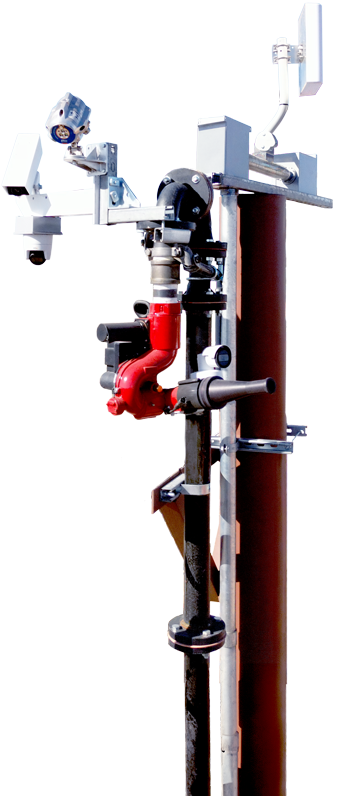
Continuous Suppression System
Eliminate threats before they spread. Our Continuous Suppression System provides nonstop, targeted suppression to keep fires from gaining ground and operations running safely.
What Does FM Data Sheet 4-14 Mean for Tipping Floors and Bunkers
I tell folks all the time that Fire Rover is not part of the Waste and Recycling Industry, we are part of the Fire Protection Industry. This is with no disrespect to the Waste and Recycling Industry. We have been on the front lines learning and fighting these fires with our clients and partners since 2015.
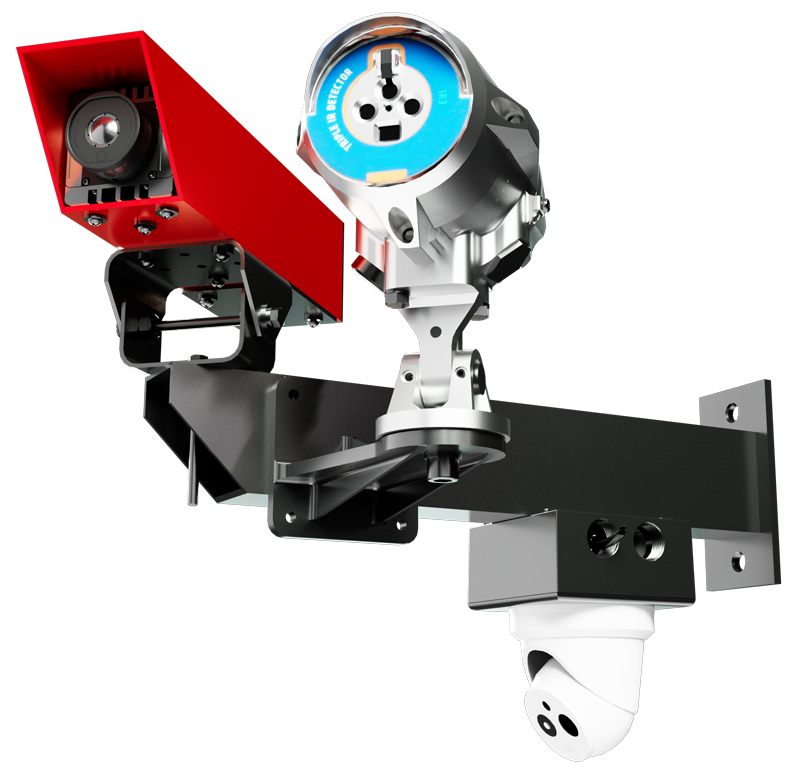
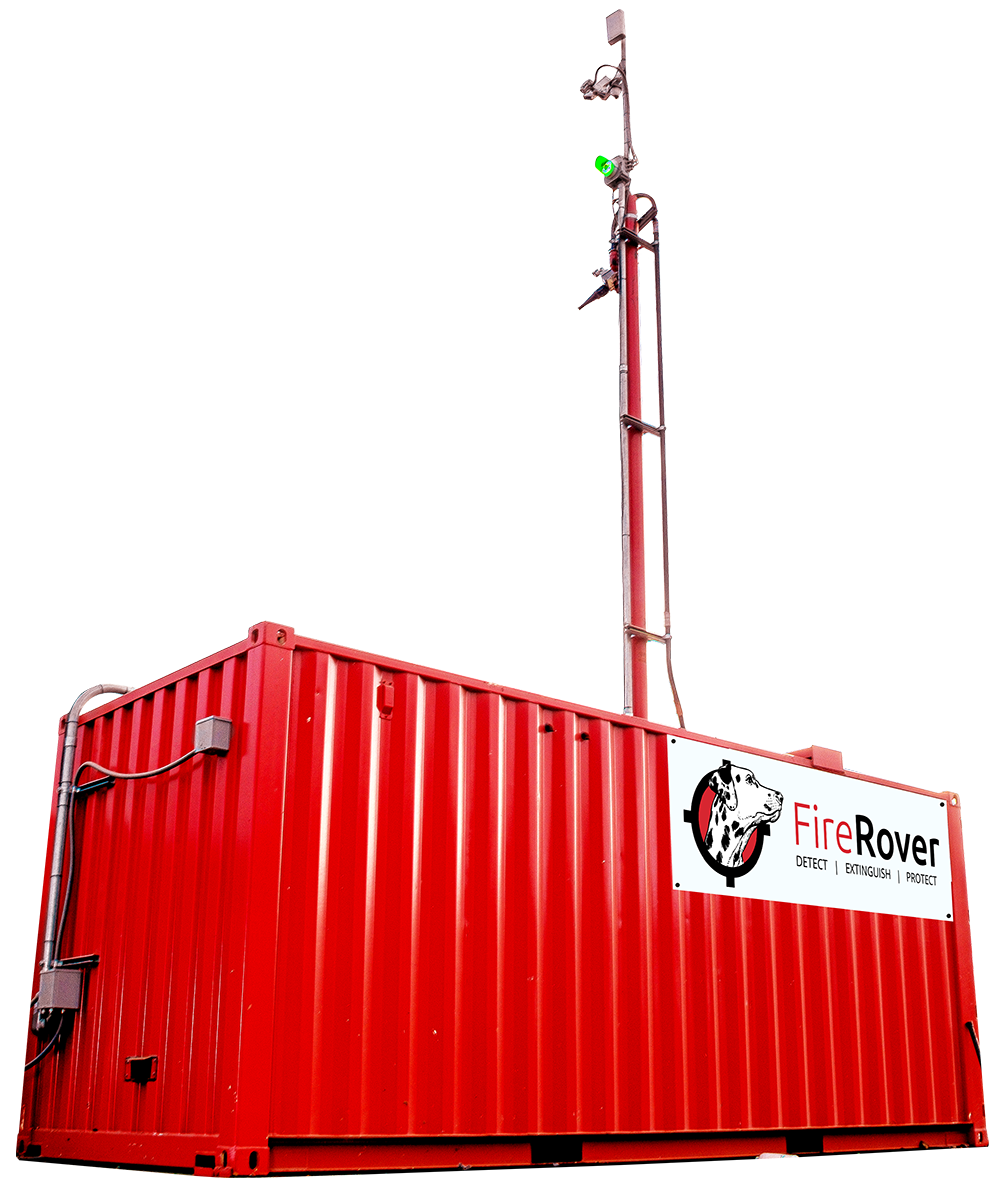
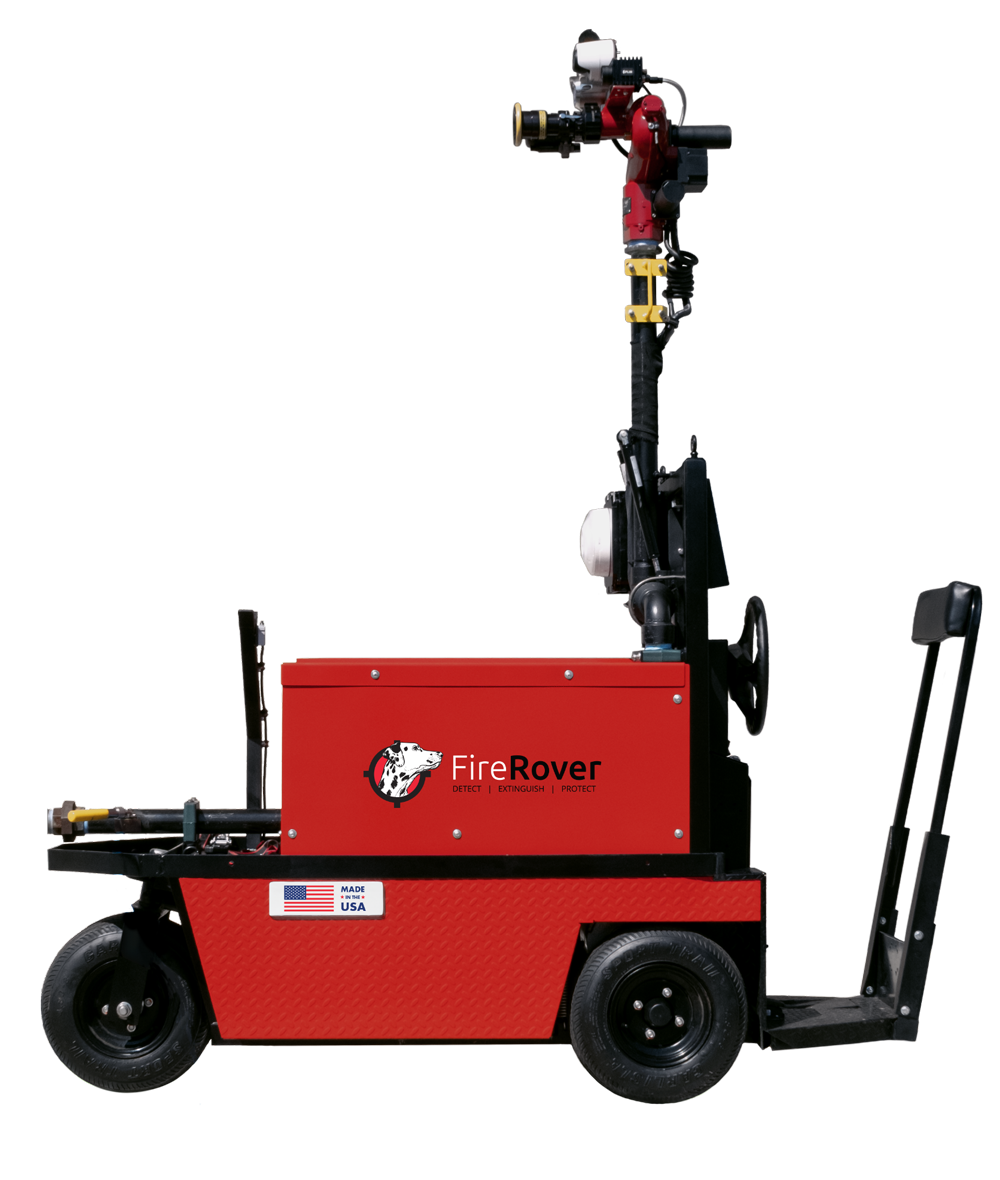
In April 2026, FM Global published Property Loss Prevention Data Sheet 4-14, Automated Monitor Fire Suppression Systems. Fire Rover is listed by FM Approvals as an Automatic Detecting Remote Controlled Monitor, and DS 4-14 sets out a documented engineering basis for using systems of this type as the primary suppression method on tipping floors, bunkers, baling operations, and indoor and outdoor commodity storage operations, in place of traditional sprinkler heads. FM Approval varies based on system configuration. We walk through what the data sheet covers in more detail in our explainer on DS 4-14.
Lewis Tyler interviewed me at the NFPA show, where we dig into this new guidance along with why we are so excited to keep protecting waste and recycling operations while also stepping into other occupancies.
The reality is that there are two scenarios where our patented, FM Approved Continuous Suppression System makes sense:
- In active locations.
- Where the fire is so dangerous, first responders would be safer in a defensive position, working to protect the public, e.g., evacuations.
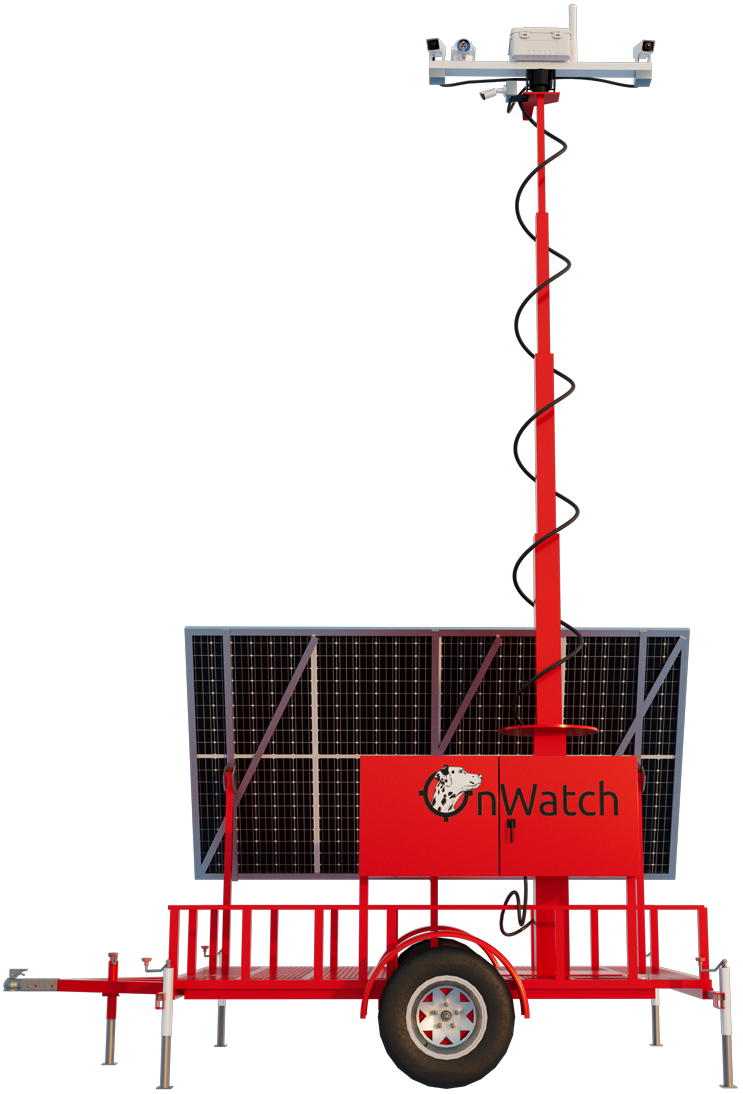
I am often asked why a facility does not simply run this in-house. During a small event, one controller can operate a system. When events get more complex, and more than one controller is needed or multiple fires are burning at once, that response does not scale without the significant infrastructure we have been building for our clients for almost twelve years. All I can say is it is not as easy as it looks, which is why I love having folks come by our demo units in Detroit, UK, France and Australia (and soon to be Middle East) where you can see firsthand the layers and layers of service, maintenance, manufacturing, and monitoring that goes into making what we do look easy.
The Strategic Takeaway
The first half of 2026 confirms that the elevated fire-risk environment this waste and recycling fire report has tracked since 2020 hasn’t eased. What’s changed is the level of granularity we can now offer facility operators, insurers, and Authorities Having Jurisdiction about how detection-and-suppression technology performs under real, sustained pressure. Not in a lab, but across hundreds of live protected sites.
The question for facility operators isn’t whether fire risk will remain elevated through the rest of 2026. The data says it will. The question is whether your facility has a system in place that can show this kind of performance data of its own: catching events early, activating suppression reliably, and keeping major losses at zero.
Talk Fire Risk With Ryan
Ryan tracks fire incidents nationwide and helps facilities reduce risk with smarter detection and suppression strategies. Connect with him to get expert guidance tailored to your operation.
Support SUPERCHARGE! — The Magic of Battery Recycling
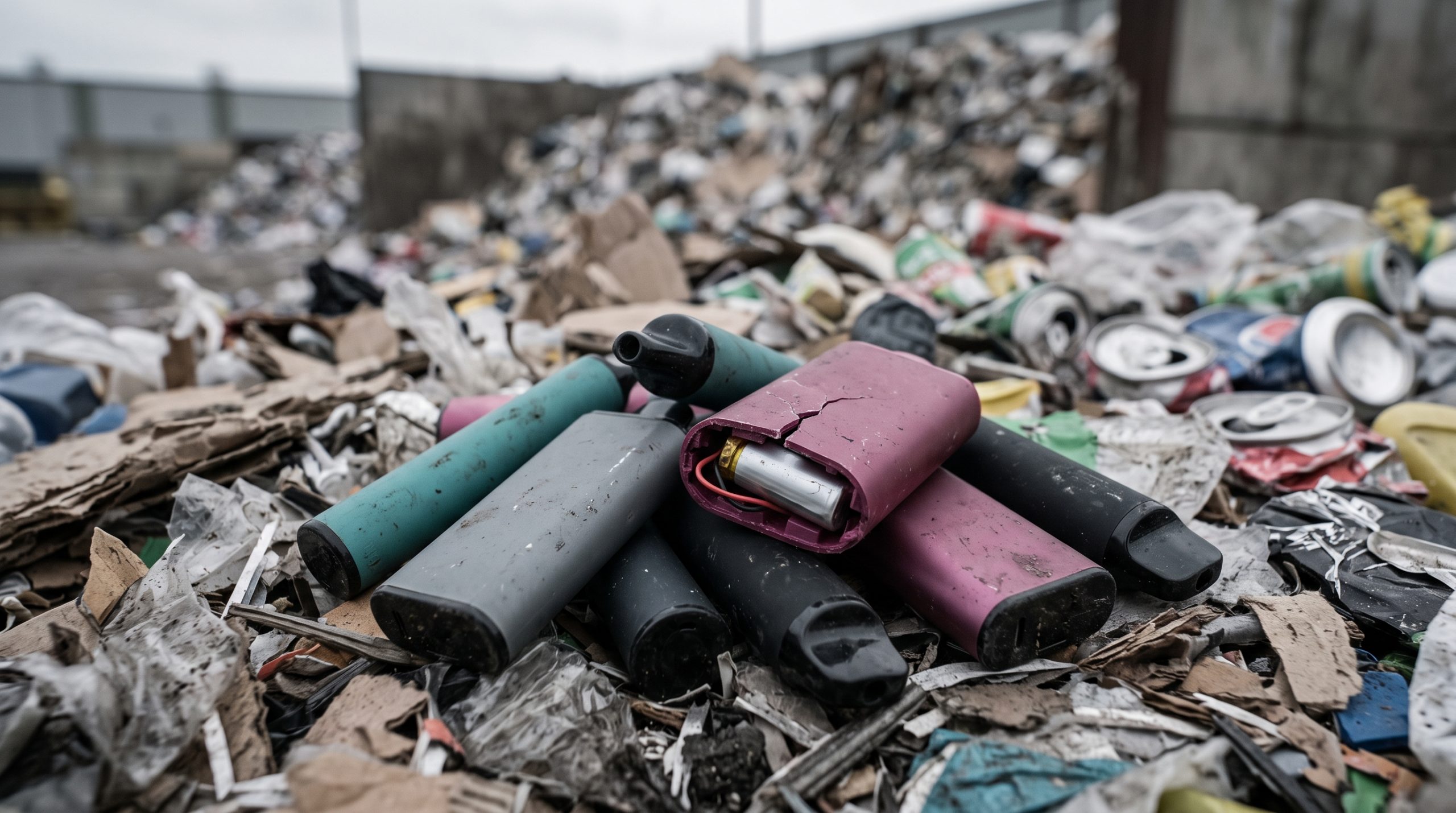
Everything in this report points to the same root cause: lithium-ion batteries are entering the waste and recycling stream in growing numbers, and most people — kids included — simply don’t know how to use, store, recycle, or dispose of them safely. Better detection and suppression technology can catch the fires that result. It can’t prevent the battery from ending up in the wrong bin in the first place. Only education can do that.
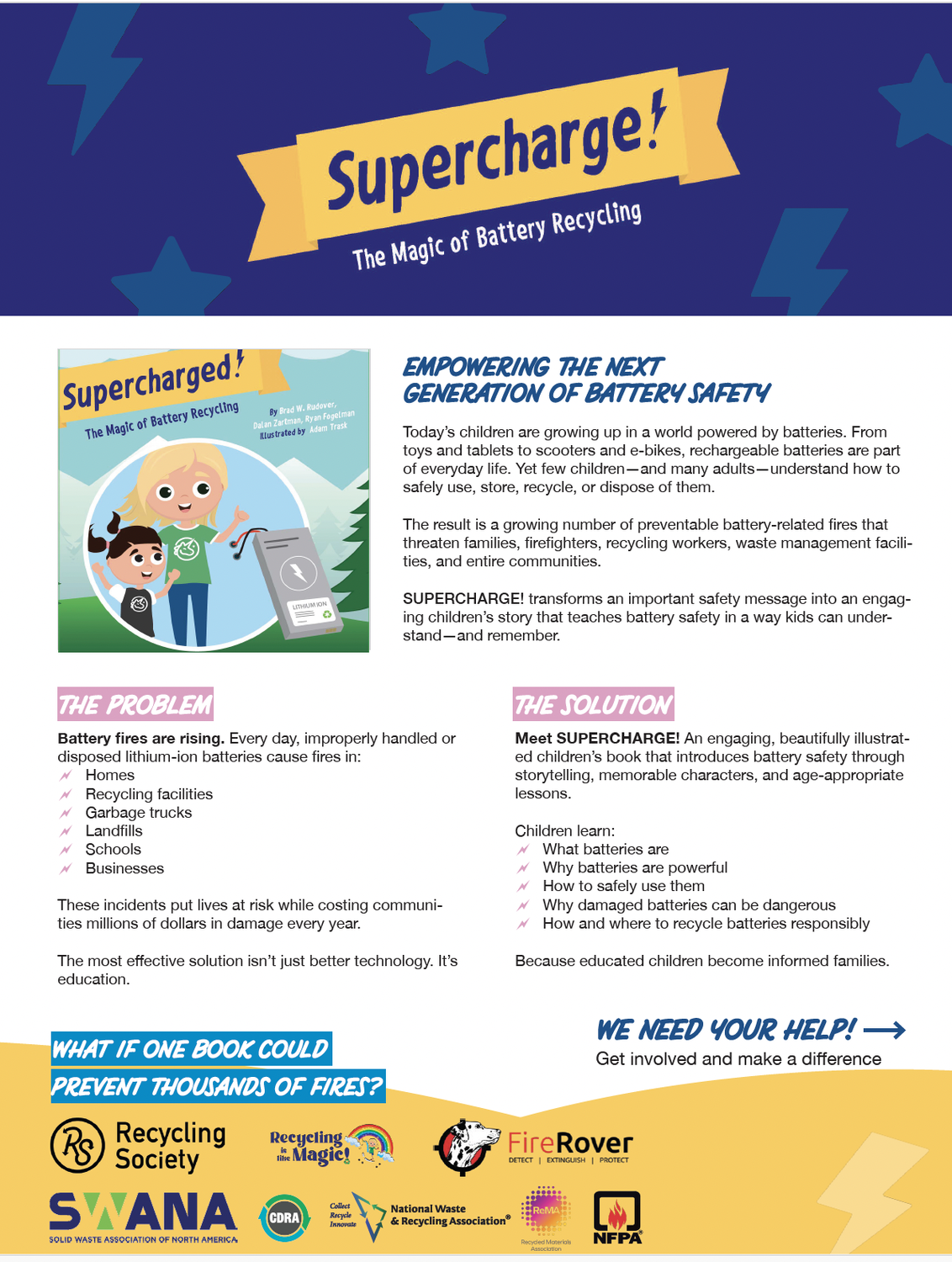
That’s why I’m proud to be part of SUPERCHARGE! The Magic of Battery Recycling, a children’s book created with Recycling Society and Recycling Is Like Magic! backed by SWANA, ReMA, NWRA, CDRA and NFPA that teaches kids what batteries are, why they’re powerful, how to use them safely, why damaged batteries are dangerous, and how to recycle batteries responsibly. Educated children become informed families — and informed families are exactly what this industry needs upstream of every transfer station, MRF, and scrap yard in North America.
What if one book could prevent thousands of fires?
SUPERCHARGE! is designed to become part of a nationwide educational initiative, with the goal of putting battery safety education into the hands of every child in America. We’re looking for founding sponsors — waste and recycling companies, battery manufacturers, fire departments, public utilities, insurers, retailers, and sustainability programs — to help place this book into classrooms, libraries, community programs, and homes across the country.
If your organization wants to demonstrate a real commitment to public safety, protect recycling workers and first responders, and donate these books to children, schools and families providing meaningful education, I’d love to talk. Reach out to me directly at rfogelman@firerover.com to become a community sponsor of SUPERCHARGE! and donate to the community of your choice.
Looking at the Second Half of 2026
As we move into the second half of 2026, the underlying conditions that have driven elevated fire activity across the industry remain unchanged. Batteries are still entering the waste and recycling stream in growing numbers. Material volumes and densities keep climbing. And the summer and fall months typically produce some of the highest incident counts of the year.
What this mid-year Performance Dashboard shows, alongside the public incident data in this waste and recycling fire report, is that the technology protecting these facilities is keeping pace: detecting more, responding faster, and preventing more of these events from becoming the catastrophic losses that make headlines.
Whether you are processing metal, paper, plastics, municipal solid waste, construction and demolition material, organics, hazmat, chemicals, or rubber, we are all facing these risks together. The work must continue, because there is no alternative when it comes to keeping employees, facilities, and the public safe.
In the meantime, if you witness a fire incident, whether at home, in public, at your facility, in a truck, or at a landfill, you can report it publicly or anonymously through the SWANA / Fire Rover “Advancing Safe Management of Batteries and Preventing Fires” portal. Your participation helps raise awareness and advances the exchange of best practices that can move the needle on reducing incidents across the industry.
Put This Waste and Recycling Fire Report to Work at Your Site
Every waste and recycling fire report we have published this year points the same direction. Elevated incident counts are now the baseline, not the exception. The operators who come through the second half of 2026 without a headline loss will be the ones who can account for what happened in the first minutes of every event on their site, including the ones that never made the news.
The Continuous Suppression System pairs automated detection with human verification and high-volume suppression, so a hotspot on a tipping floor gets confirmed and knocked down while it is still localized. Contact our team to see what the numbers behind this waste and recycling fire report would look like for your own site.
Related Articles
The Anatomy of an Electronics Recycling Fire
September 2026 Fire Report: The Extended Summertime Spike, the Vape Effect and a First Sign of Progress