





Originally published February 2026. As published in Waste360.
Every year, Ryan Fogelman’s annual report tracks publicly reported waste and recycling facility fires across the U.S. and Canada. This preview of the 2025 data looks at what rising losses mean for insurers and for the operators investing in fire protection.
How Many Waste and Recycling Facility Fires Happened in 2025?
Another year is complete, and another set of data is ready to be added to my annual report. Unfortunately for the waste and recycling industry, we experienced 448 fires on our front lines in 2025.
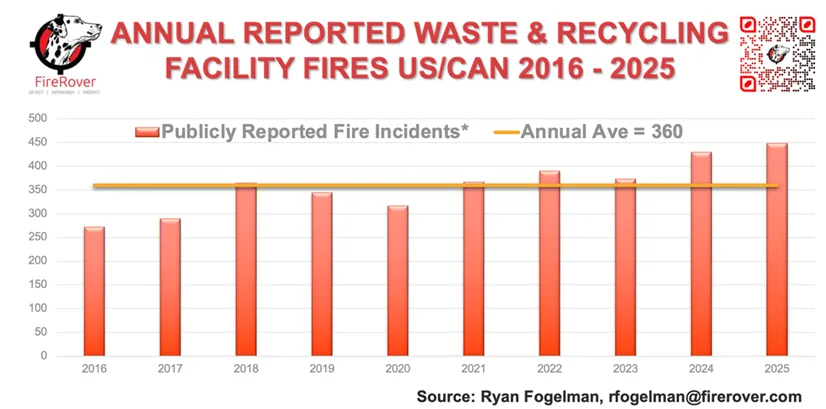
Based on a simple population assumption, we can extrapolate that the industry suffered 2,688 waste and recycling facility fires in the U.S. and Canada in 2025.
Last year’s report, “We Are at War: The 8th Annual Waste & Recycling Facility Fires Report in the US & CAN,” is being updated to include 2025 data and analysis. This year’s report is titled, “Fortifying the Front Lines: The 9th Annual Waste & Recycling Facility Fires Report US/CAN.”
How Operators Are Fortifying the Front Lines
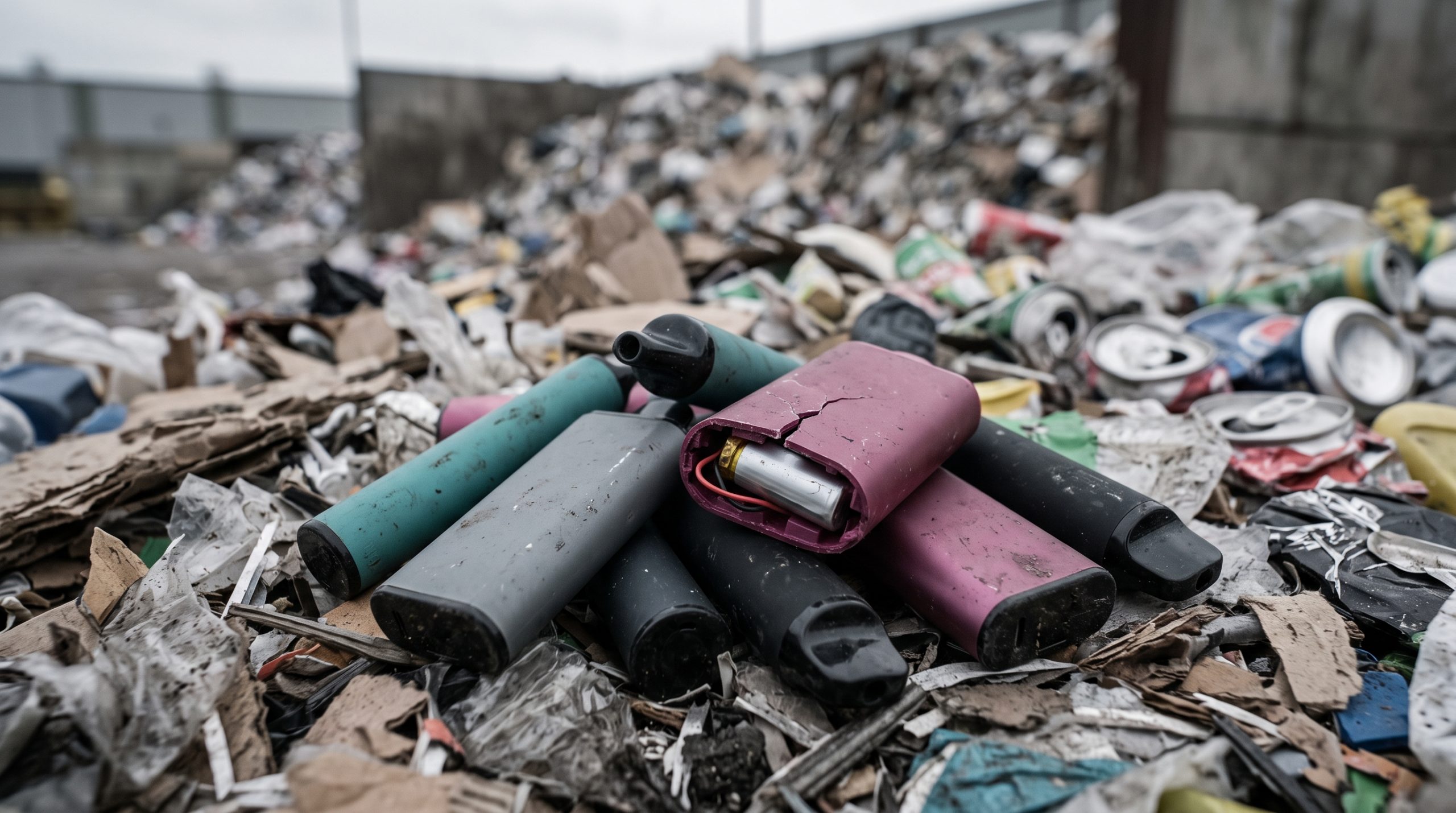
Across the U.S., Canada, France, Australia and now the United Kingdom and New Zealand, operators are making the investments needed to get a handle on the battery-related fire risk, a challenge likely to haunt us for many years. To be clear, these investments extend beyond our Fire Rover solution and reflect a layered approach that combines public education, policies to expand local and safe battery drop-off locations, efforts to make batteries removable from devices and operational best practices.
The waste and recycling industry is fortifying its front lines, yet we remain at war. A decade ago, I warned that lithium-ion batteries would present dangerous hazards across waste, recycling, scrap metal, organics, paper, plastics, construction and demolition and electronics recycling operations. That warning is now a widespread reality, not only in our industry but in others as well.
The good news is that many operators had the chance to prepare. They updated emergency response plans, invested in employee training, adopted new operational best practices and implemented technologies to detect and suppress fires. Those efforts are now starting to pay off, but we still have a long way to go to fully get a handle on this growing problem.
Why Did Insurers Start Leaving the Industry?
My intention was to warn the industry, not fear monger, so that operators could be prepared and further focus on safety for the oncoming dangers we were seeing. While some initially viewed my warning as negative publicity and the reason why insurers began leaving the industry, the reality is global insurance claims data reveals a large increase in claims and losses beginning in 2018, the same time we began to experience the “lithium-ion battery wave” in waste and recycling streams. Therefore, insurers weren’t responding to the warning; they were responding to the claims.
What Did Waste and Recycling Facility Fires Cost in 2025?
In 2025 alone, I estimate that waste and recycling facility fires caused approximately $2.5 billion in damages to our critical waste and recycling infrastructure in the U.S. and Canada. This estimate is based on the 448 publicly reported incidents, including approximately 100 major/catastrophic events, with an average facility damage and replacement cost of approximately $400k to $25 million. As with my previous estimates and others that have completed similar estimates, I believe this number is conservative. To be clear, I still believe that these losses are not just due to lithium-ion batteries, but to traditional hazards that have been in our streams for decades.
How Do Insurers Evaluate Fire Risk?
Insurers are not making underwriting decisions based on commentary or reports. They are looking at real claims and responding to loss data, severity trends and their ability to properly price and mitigate risk. When risk increases or becomes unpredictable, insurers are more likely to increase costs or decline coverage.
Three Reasons Operators Invest in Fire Protection
This has led more operators to invest in fire protection, generally for one of three reasons:
- Business protection – to safeguard employees, assets and operations.
- Regulatory compliance – to meet occupancy, permitting, certification or other requirements.
- Insurance requirements – to mitigate risk for underwriting.
From an insurer’s perspective, risk mitigation investments are not optional and are what help to make a company insurable. While it’s an insurer’s job to evaluate facilities, identify risk and make recommendations, it’s an operator’s job to ensure insurers understand our industry and the risk inherent in the business. Operators may opt to accept recommendations, seek alternative coverage or choose to self-insure, but, ultimately, the underlying risk won’t disappear.
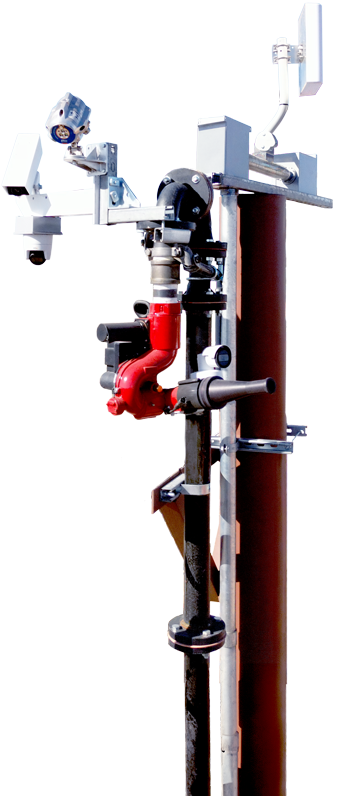
Continuous Suppression System
Eliminate threats before they spread. Our Continuous Suppression System provides nonstop, targeted suppression to keep fires from gaining ground and operations running safely.
Why Technology Alone Is Not Enough
After more than 10 years of experience collecting and evaluating industry fire data, I’ve found that technology alone is not enough. Solutions like Fire Rover early detection and remote human response must be paired with education and proven operational best practices such as material separation, safe facility design and convenient local drop off locations.
FM Approval and Real-World Performance
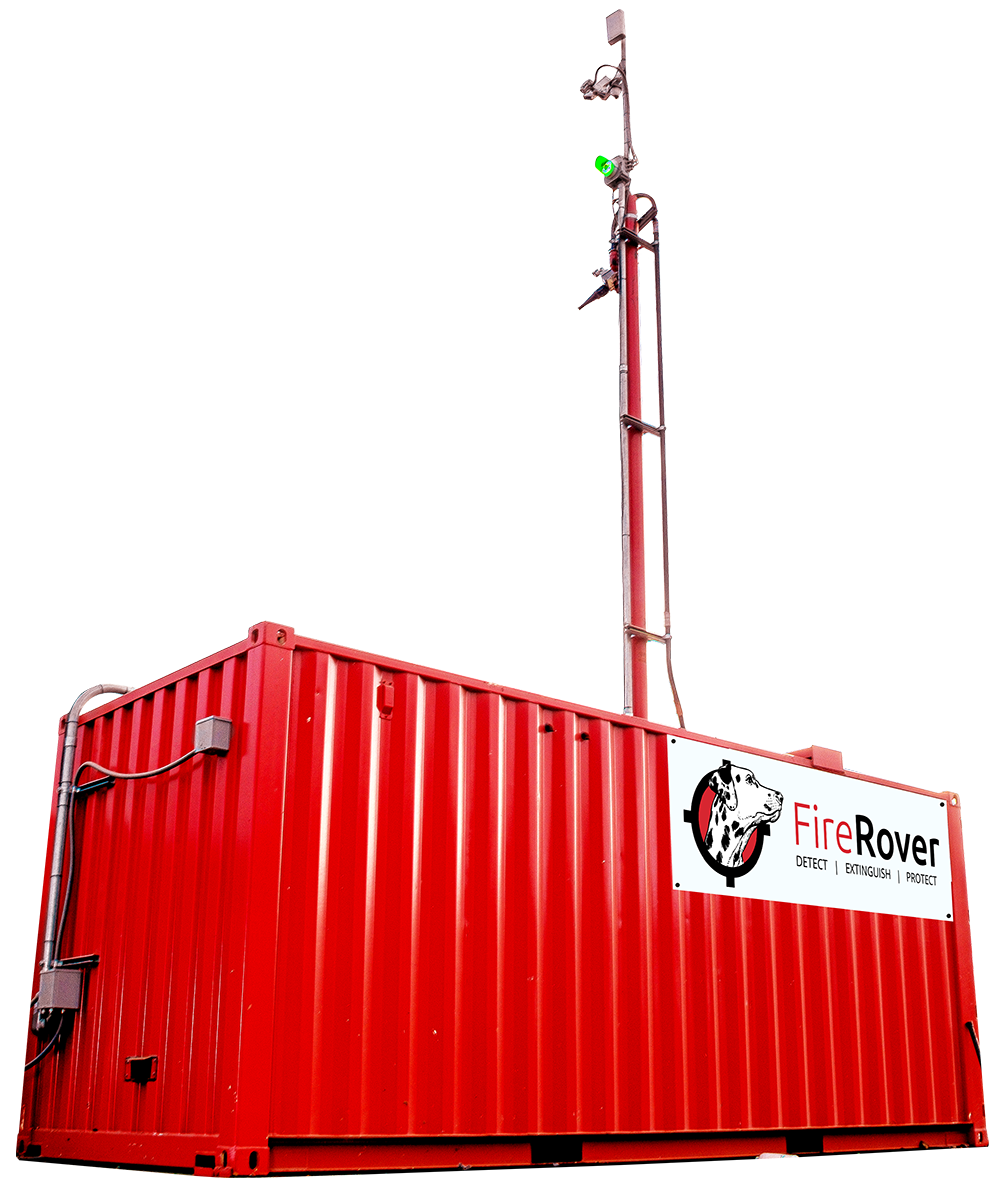
Knowing this, we’ve worked over the years to improve Fire Rover’s Continuous Suppression System, transforming it into the first FM-approved remote-operated fire protection system. This certification proves Fire Rover’s performance as well as reliability in real-world scenarios. FM Approval varies based on system configuration.
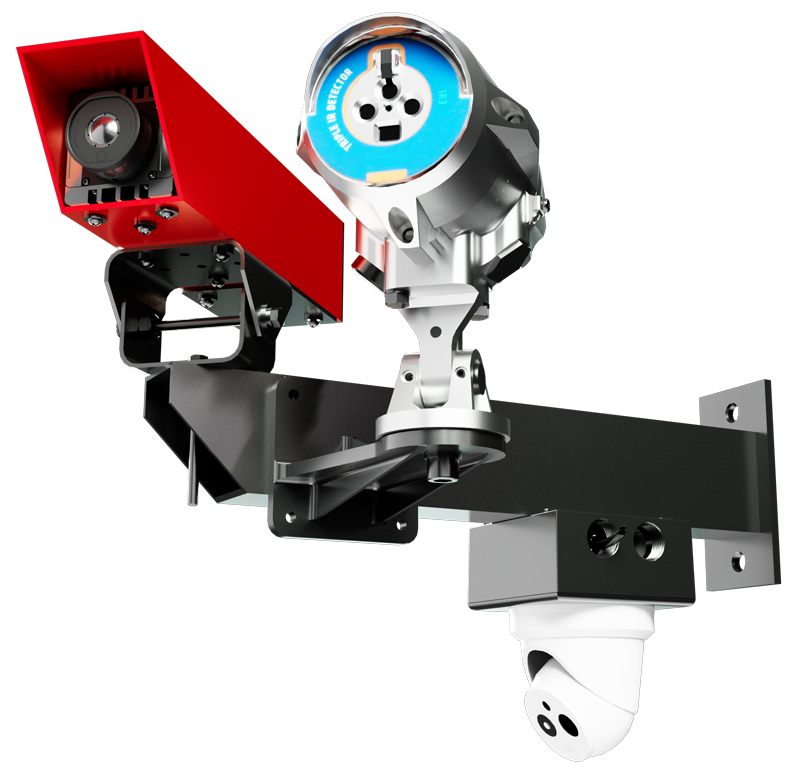
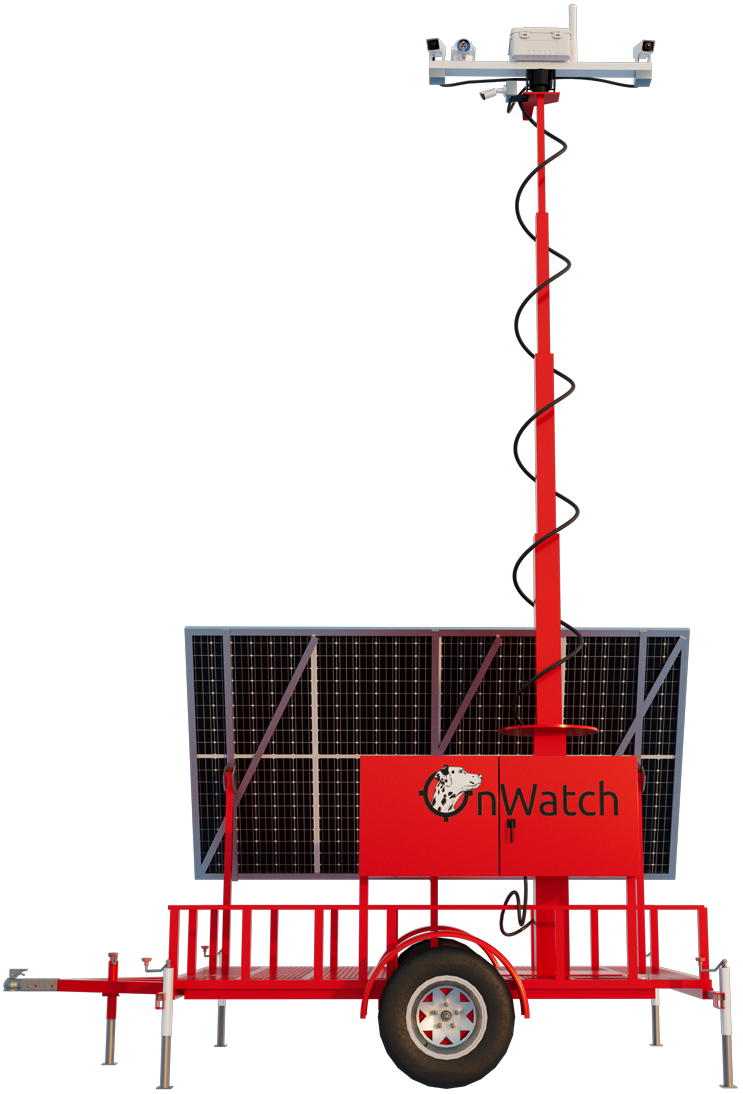
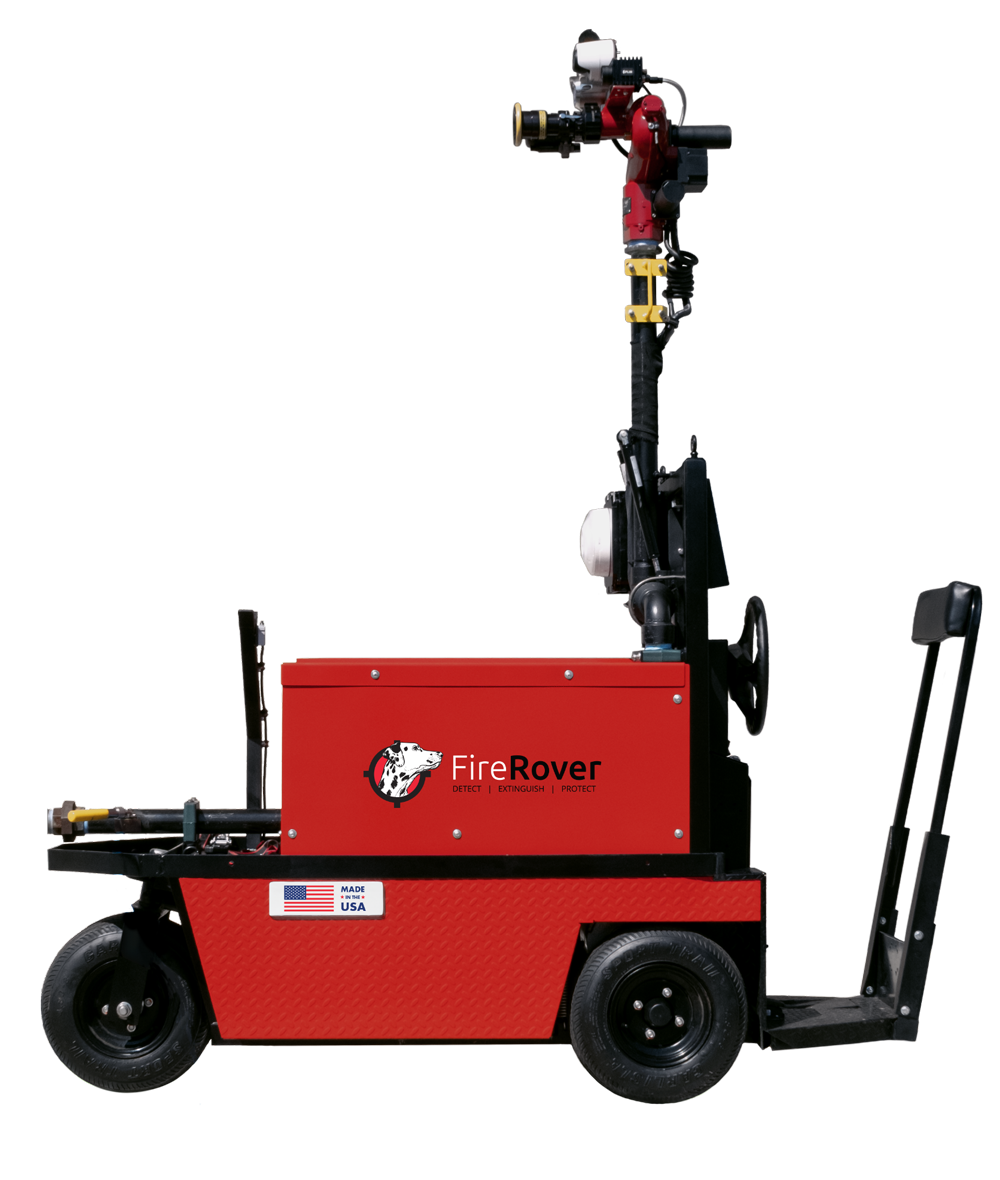
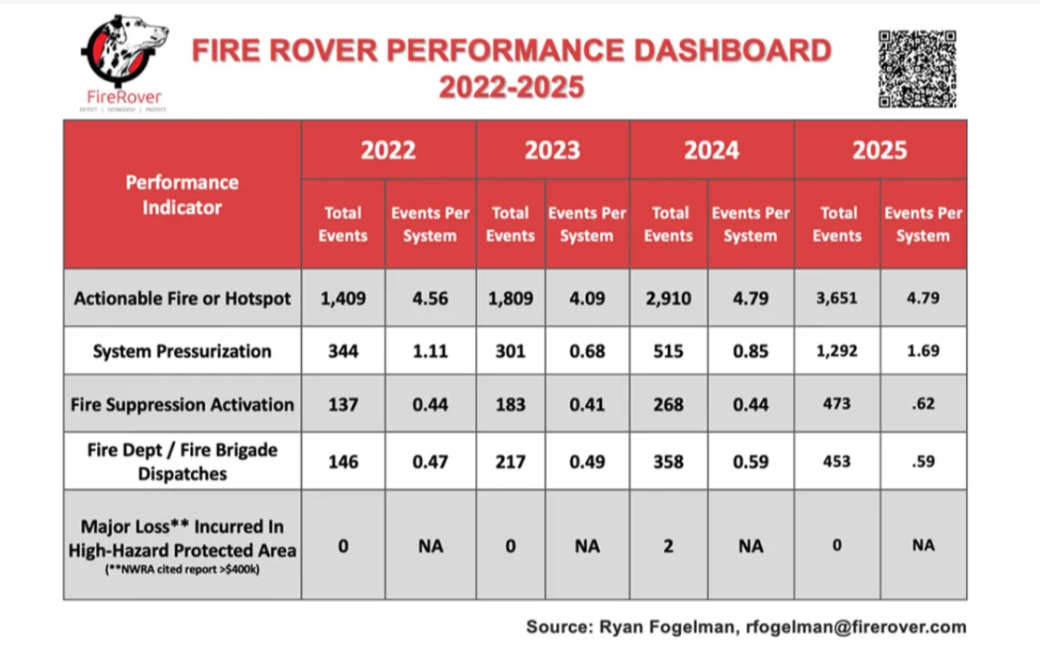
Fire Rover detects, verifies, targets and suppresses fires early before they escalate into a catastrophic event, allowing operators and insurers to sleep better at night knowing risk is reduced. In 2025 we responded to 3,651 confirmed fire incidents, suppressing 473 fires on our customers’ front lines.
Why Are Insurers Returning to the Industry?
This is one of the reasons why we’re not losing insurers but regaining them. More insurers are willing to underwrite facilities that demonstrate strong risk mitigation practices, and I’ve been working hard to show insurers that Fire Rover is an effective solution that manages the critical first minutes of an event and can reduce the risk of catastrophic loss by more than 99%. Self-insured operators can fare even better, as they can achieve the same catastrophic risk reduction at a fraction of the cost of traditional insurance premiums.
Talk Fire Risk With Ryan
Ryan tracks fire incidents nationwide and helps facilities reduce risk with smarter detection and suppression strategies. Connect with him to get expert guidance tailored to your operation.
Early Adopters Are Being Rewarded
As we continue to expand our solution globally, we’re seeing that the early adopters of our solution have been rewarded. The risk is getting greater, and their investments in our solution, operational best practices and education are paying off. However, those who followed the wait-and-see approach are now facing higher costs and greater exposure. But it’s not too late to join us.
The industry is fortifying its front lines, and we are still at war with hazards gaining in numbers. The threat is real, and it’s still growing. But there are solutions that exist, and those who choose to take action today will be best positioned to protect their employees, assets and operations.
Get the 9th Annual Waste and Recycling Facility Fires Report
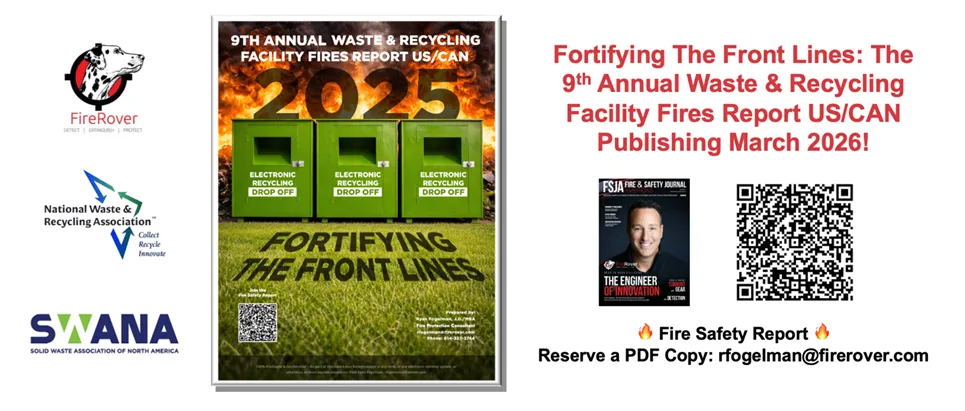
You can reserve your PDF copy of the upcoming 2025 annual report here. I’m also hosting my annual webinar on March 11th at 2:00 p.m. EST with co-hosts Kirk Sander, senior vice president/chief safety and standards at the National Waste & Recycling Association, and Kristyn Oldendorf, senior director of public policy and communications at the Solid Waste Association of North America. Secure your spot here.
Strengthen Your Fire Risk Profile Before Your Next Renewal
Insurers are pricing waste and recycling facility fires on real loss data, so every facility’s record carries into the underwriting conversation. Operators who can show how they manage the first minutes of an event give insurers something concrete to credit.
Fire Rover’s Continuous Suppression System detects, verifies and suppresses fires remotely, adding a layer of protection against waste and recycling facility fires that supports site teams without sending them toward the hazard. Contact our team to explore how it fits your facility and your next underwriting conversation.
Related Articles
The Anatomy of an Electronics Recycling Fire
September 2026 Fire Report: The Extended Summertime Spike, the Vape Effect and a First Sign of Progress