







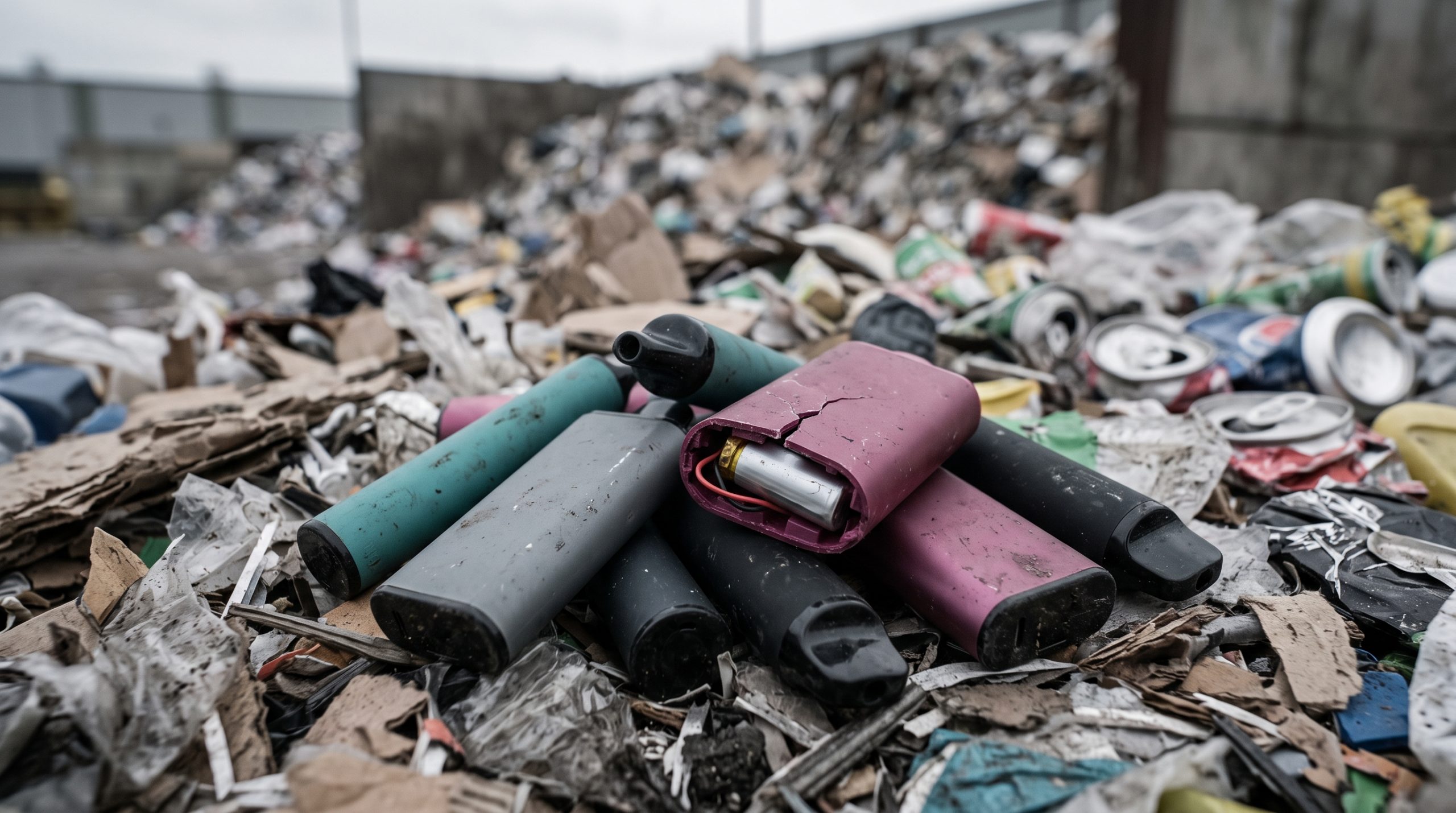
A disposable vape weighs less than an ounce and costs about as much as a sandwich. It also holds a sealed lithium-ion battery that was never designed to be crushed, punctured, or buried, which is exactly what happens once it reaches a landfill or transfer station.
The sheer volume of these products is what separates this issue from earlier battery problems. A damaged power tool battery pack is serious, but it arrives only occasionally. Vapes arrive constantly, in every load, and they look like litter rather than hazardous waste. So the question is how they ignite once they arrive, and what can be done about a hazard that enters the gate mixed into thousands of tons of ordinary material.
Why Disposable Vapes End Up in the Landfill Waste Stream
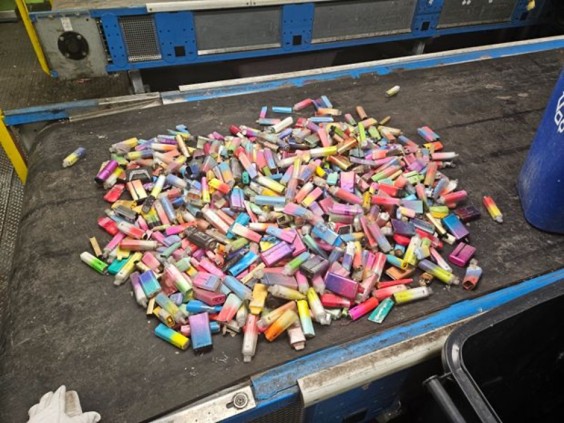
Roughly 1.2 billion disposable vapes enter North American waste streams every year. The PIRG Education Fund’s vape waste research tracked disposal at 5.7 devices per second in 2023, up from 4.5 per second the year before.
They reach waste and recycling operations because of a disposal gap, not carelessness. Many county household hazardous waste programs will not accept a spent vape, and the nearest site that does can be dozens of miles away, and charge a per-visit fee. Faced with that, most people use a trash bin.
The more frustrating pattern is the well-intentioned one. Consumers who know a vape does not belong in the trash often put it in the recycling cart instead, which redirects the device to a materials recovery facility rather than removing it from the stream. Even someone who wants to handle it right hits a wall. Battery recycling programs need the battery on its own, but a disposable vape is built as one sealed unit. Short of prying it apart with tools, there is no way to get the cell out, so the whole device ends up in a bin anyway. The EPA classifies these as acute hazardous waste, and yet they are as readily available as gum.
What Happens When a Vape Battery Reaches the Tipping Floor
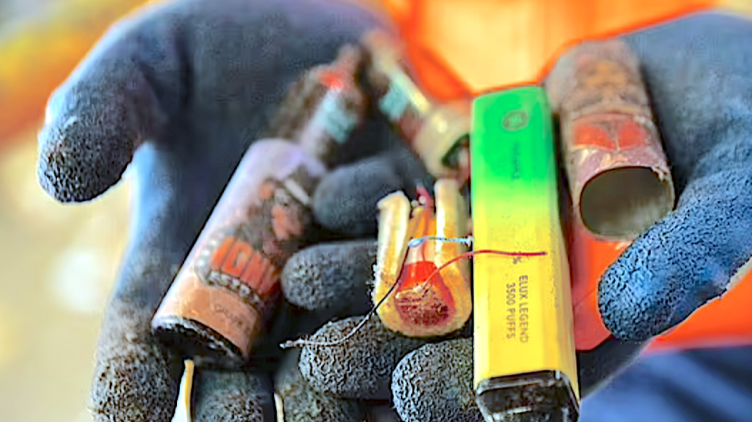
Each device goes on a similar journey after the consumer is finished with it: It goes into a curbside cart, gets compacted in a collection vehicle, lands on a tip floor, and reaches a shredder or baler. Much of the damage happens upstream, which is why a disciplined site can still receive a cell that is already unstable on arrival.
The direct ignition paths are mechanical: crushing, puncturing, short-circuiting, and vibration from routine handling. Any of the four can breach a cell and start thermal runaway, the self-sustaining reaction in which a damaged battery heats itself faster than it can shed that heat. Because it supplies its own fuel and oxygen, it does not behave like a paper fire.
A second category sits outside any operator’s control, because defects, internal cell failure, and overheating can carry a device into thermal runaway with no mechanical trigger. The EPA’s analysis of battery fires in waste management documents both, and processors consistently report batteries as their largest single cause of fires.
Scale is the part that lands with operators: one regional processor reports finding 200 to 300 lithium-ion batteries a day in incoming material at each of his facilities.
Why Disposable Vape Fires Are Hard to Catch Early
Disposable vape fires are hard to catch early for a physical reason: the first thing they produce is heat, not smoke. A cell can enter thermal runaway with no visible warning, and because the device is small, it is usually buried in a pile rather than sitting on top of one. By the time there is something to see, surrounding material is already involved.
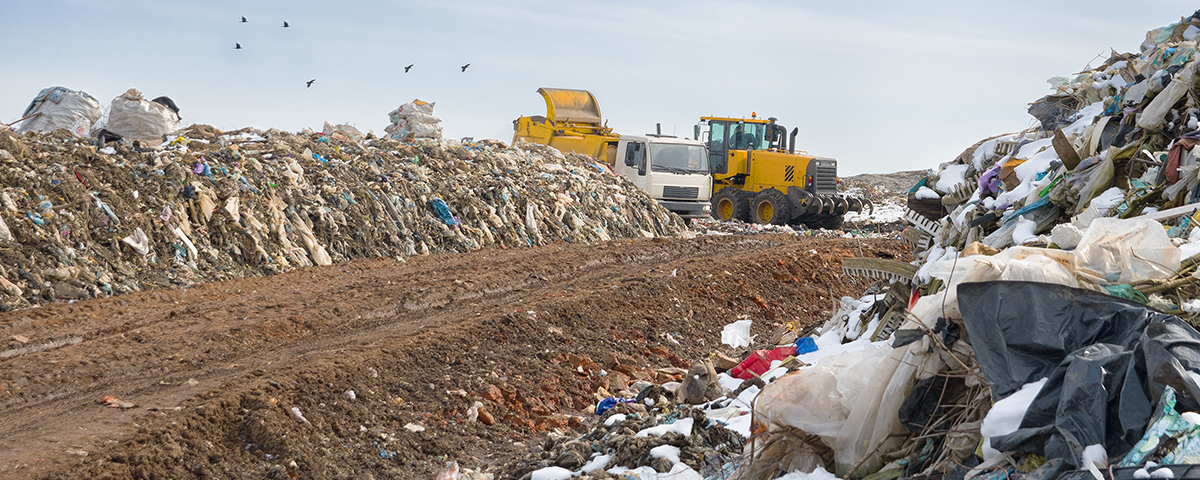
Outdoor conditions compound it. Much of a landfill has no building around it at all. The waste sits in the open and gets moved all day, and with no ceiling overhead there is nowhere to mount a fixed system that could sense a problem.
Indoors, the issue is timing rather than capability. Fixed suppression systems activate reliably at a defined threshold, but a smoldering cell deep in a pile can burn for a stretch before it produces enough heat or smoke at ceiling height to reach it. The interval worth planning around is the one before activation.
The same logic applies to staffing. Night shifts, weekend coverage, and the minutes between loader passes are gaps in time, not gaps in attention. Across the 64 waste facilities in the EPA’s review, about a quarter had a battery fire interrupt operations at least once and close to a third took a financial hit. What separates a small cleanup from an insurance claim is usually how long the fire burned before anyone knew it was there.
The Numbers Behind the Vape Effect
The trend now has a name. We call it the Vape Effect, drawing on fire incident data that has been compiled and published annually since 2016.
That dataset closed 2025 at 448 publicly reported waste and recycling facility fires across the U.S. and Canada. The previous record was 430 and the long-run average is about 360, putting last year roughly 25 percent above normal.
The shape of the year has changed too, which matters more than the total. Early 2026 reporting shows the traditional summertime spike flattening into a year-round elevated baseline. A seasonal risk can be staffed seasonally; a constant one cannot.
The attribution rests on the trend line. Reported incidents ran about 26 percent higher across 2022 through 2025 than the 2016 to 2021 average, a period that maps closely to disposable vapes reaching consumer scale. PIRG puts the annual cost of vape-driven waste facility fires at 95 million dollars or more, before accounting for what one incident does to a single site’s downtime, cleanup, and insurance posture. Our breakdown of the cost of a fire covers that side.
Talk Fire Risk With Ryan
Ryan tracks fire incidents nationwide and helps facilities reduce risk with smarter detection and suppression strategies. Connect with him to get expert guidance tailored to your operation.
What Landfill and Transfer Station Operators Can Do Now
No single control solves this. What works is a stack of practices applied across the board.
- Inbound screening: Visual inspection at the scale and on the tip floor catches obvious contamination, and a growing number of facilities have added X-ray screening to find batteries before material moves downstream.
- A written hot load protocol: Define the staging area, isolation distance, monitoring interval, and who on shift can call a load hot. A protocol that only lives in someone’s head does not survive a night shift.
- Pile and floor management: Turning practices, height limits, and keeping material moving reduce the chance that a smoldering cell sits buried long enough to involve what surrounds it.
- Crew training and reporting: Teach the crew what a compromised cell looks, sounds, and smells like before it ignites. Fire Rover’s battery resources with SWANA include an incident reporting form that feeds the SWANA Lithium-Ion Battery Workgroup, plus a lookup residents can use to find local battery collection sites.
- Track the policy layer: Maine became the first state to enact a vape-specific extended producer responsibility program, requiring manufacturers to fund drop-off sites near 90 percent of residents by 2027. California, New Jersey, and pilots in New York and Missouri are moving too. These programs change inbound volume over time, so they belong in long-range planning.
Together, these practices reduce how many devices reach the floor intact. They do not reduce that number to zero, and at current volumes nothing does, which leaves a detection question.
Early Detection System
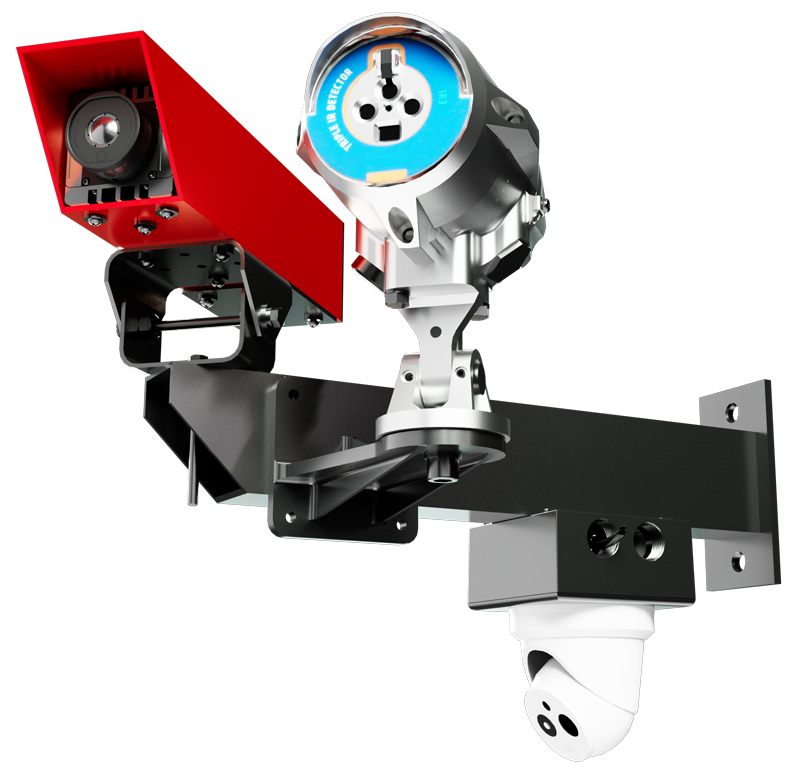
Don’t wait for smoke and flames. Fire Rover’s Early Detection System uses thermal cameras and human verification to spot fire threats instantly and dispatch emergency services quickly.
How Early Detection Shortens the Timeline on Disposable Vape Fires
If a hazard’s first signal is heat, the layer that closes the gap has to be looking for heat. That is the argument for thermal detection with disposable vape fires specifically, and why screening and detection solve different halves of one problem.
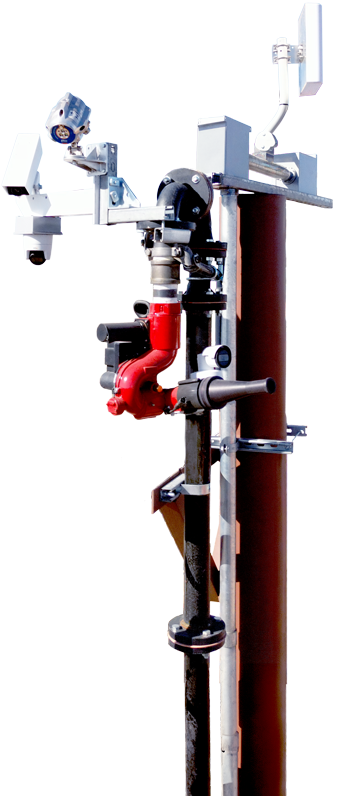
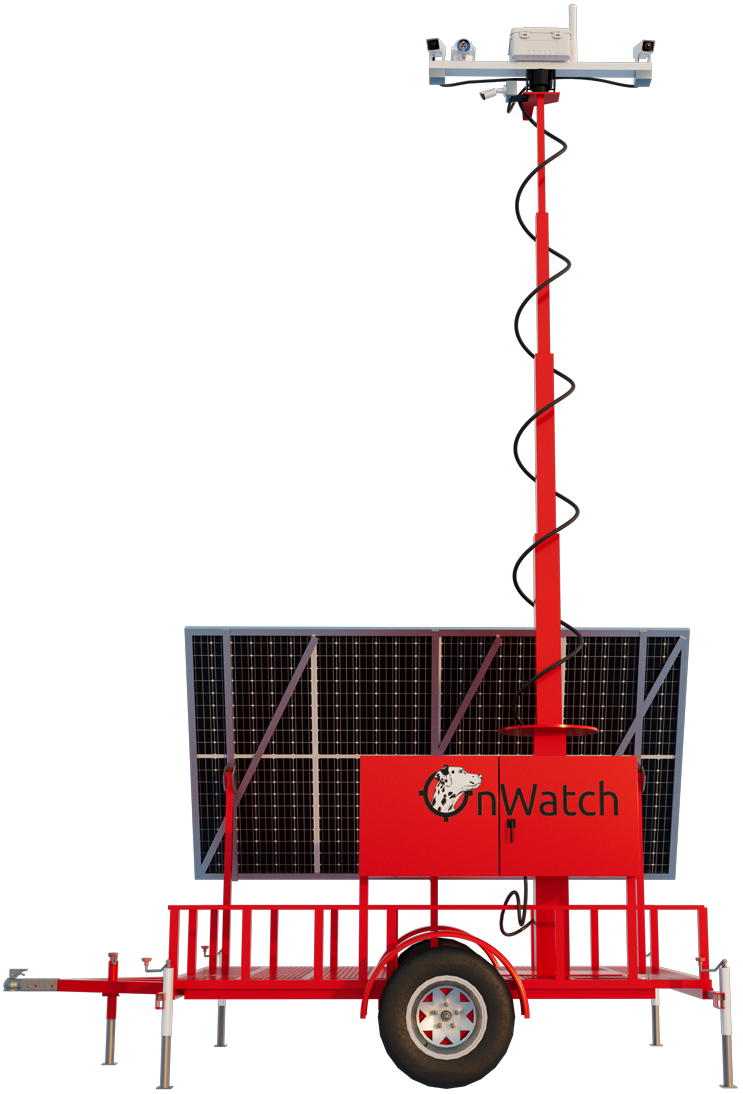
Fire Rover’s Early Detection System combines infrared cameras, thermal sensors, flame detection, and smoke analytics with live human verification. Thermal imaging scans continuously for abnormal heat patterns, including patterns well below what is visible to someone standing nearby, so a hot spot can be identified while it is still localized.
Human verification is what makes the approach workable outdoors. A tip floor in August produces steam, sun-heated metal, and hot asphalt, all of which read as heat. A trained operator reviewing live video decides whether a signature is a developing fire or a warm loader bucket, which keeps false alarms from eroding the crew’s response to real ones.
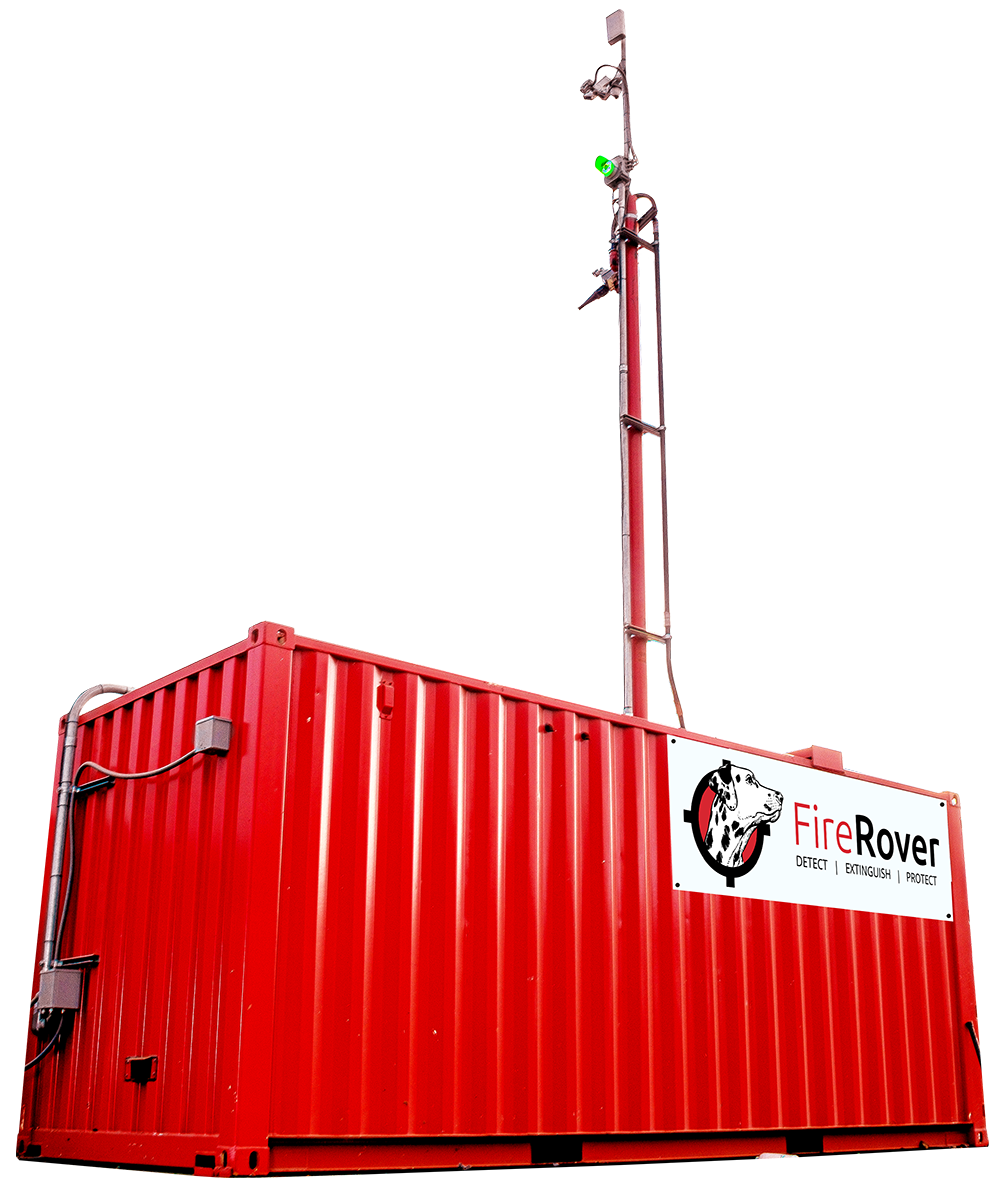
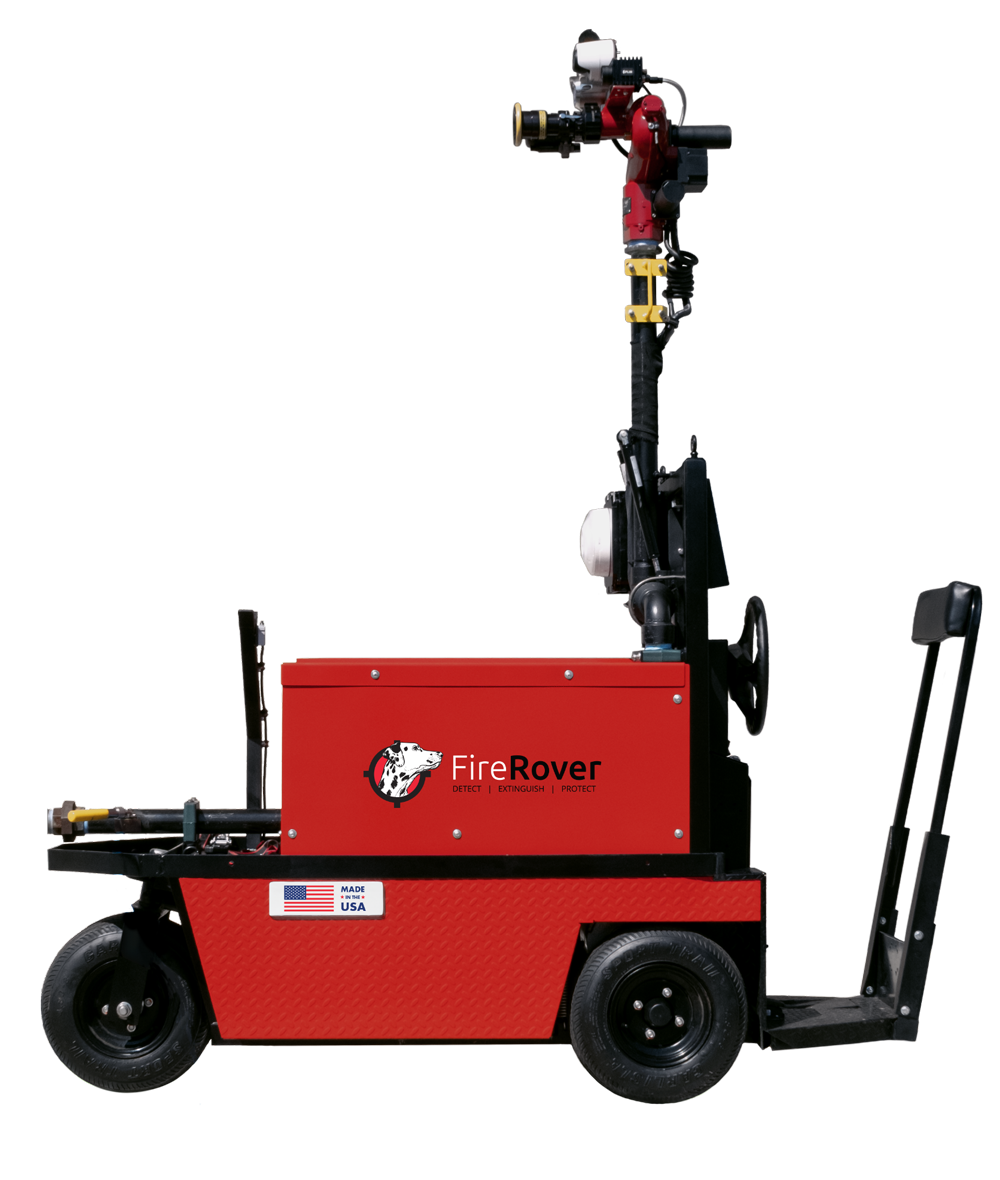
Around-the-clock monitoring extends coverage into the hours when a site is thinly staffed or closed. It adds a layer alongside what a facility already has, and when an event escalates, responding crews arrive knowing where the fire is and what it involves. For sites with persistent exposure, that layer is often paired with the Continuous Suppression System so identification and response happen in one motion.
Get Ahead of Battery Fire Risk at Your Site
Vapes will keep arriving at the gate whether or not disposal infrastructure catches up. What a site controls is how much time passes between the moment a cell fails and the moment someone knows, because that interval decides whether the outcome is a contained event or a closed tip floor, an insurance claim, and lost throughput.
Fire Rover’s Early Detection System identifies developing heat in waste piles and verifies it with a live operator, so a small event gets attention while it is still small. Contact our team to talk through what protecting your working face and tip floor would involve.
Related Articles
The Anatomy of an Electronics Recycling Fire
September 2026 Fire Report: The Extended Summertime Spike, the Vape Effect and a First Sign of Progress