








Originally published September 2025. The incident counts and year-end projections below reflect data reported through August 2025.
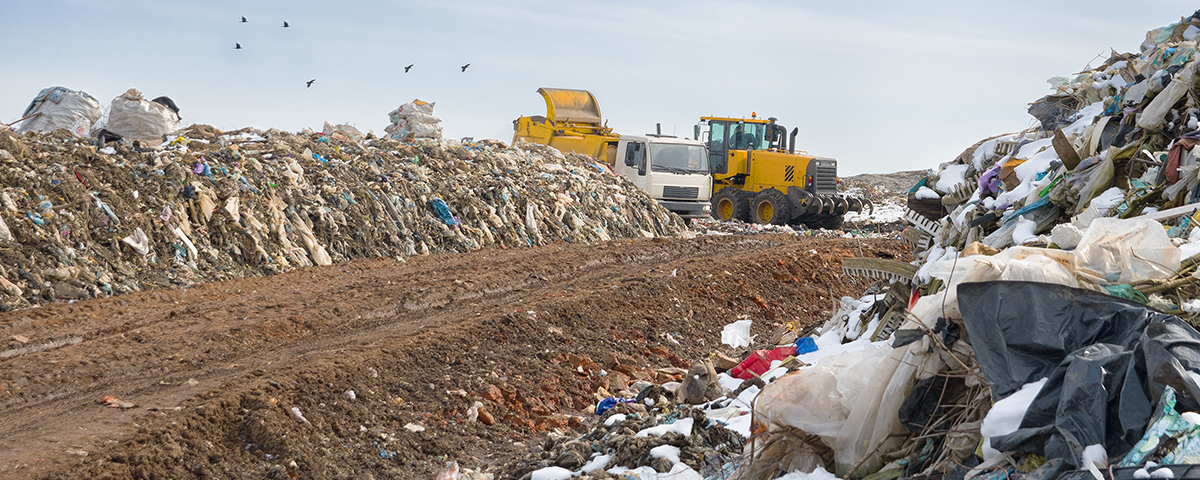
As we near the end of summer, fire incidents continue to rise globally in waste and recycling facilities. In the U.S. and Canada, August reached a record-breaking high for incidents, following on the heels of July’s all-time high. This data supports a growing, concerning trend: vape battery fires and other incidents traced to improperly discarded personal storage or personal electronics with lithium-ion batteries.
In this month’s column, I explore the evolving impact of the “vape effect,” the rise in vape battery fires it describes, and how the industry is responding.
August 2025 Fire Data
The first half of this year set new records, and not in a positive way. Unfortunately, we experienced the worst first quarter since I began tracking and reporting waste and recycling facility fire data in 2016. July 2025 then marked a new high, with 56 reported fire incidents, the most ever recorded in a single month. And just when we thought the worst was over, August followed closely with 49 reported fire incidents, the most ever recorded for that month.
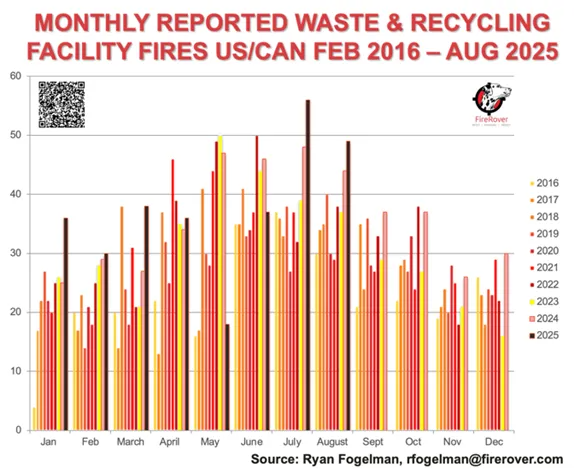
Of these 49 incidents, 19 occurred at waste, paper and plastics facilities, 14 at metal recycling yards, seven at organics facilities, four at rubber operations, two each at construction and demolition recycling facilities and electronics recycling operations and one at a hazmat operation.
This marks the lowest number of incidents in May and June, and the highest in July and August, in years. So, what does it all mean?
How Are Fire Incidents Trending?
When comparing the first eight months of 2025 to the same period over the past nine years, only 2024 saw the same number of publicly reported fire incidents, a trend I can only assume will hold steady until the end of this year.
To put this into perspective, at Fire Rover, we’ve already suppressed more fires than last year’s total by over one hundred incidents. We’re currently on pace to suppress more than 500 incidents at client facilities across the globe in 2025, up from 268 in 2024. Check out our latest performance report in last month’s article.
Vape Battery Fires Set a New Risk Baseline
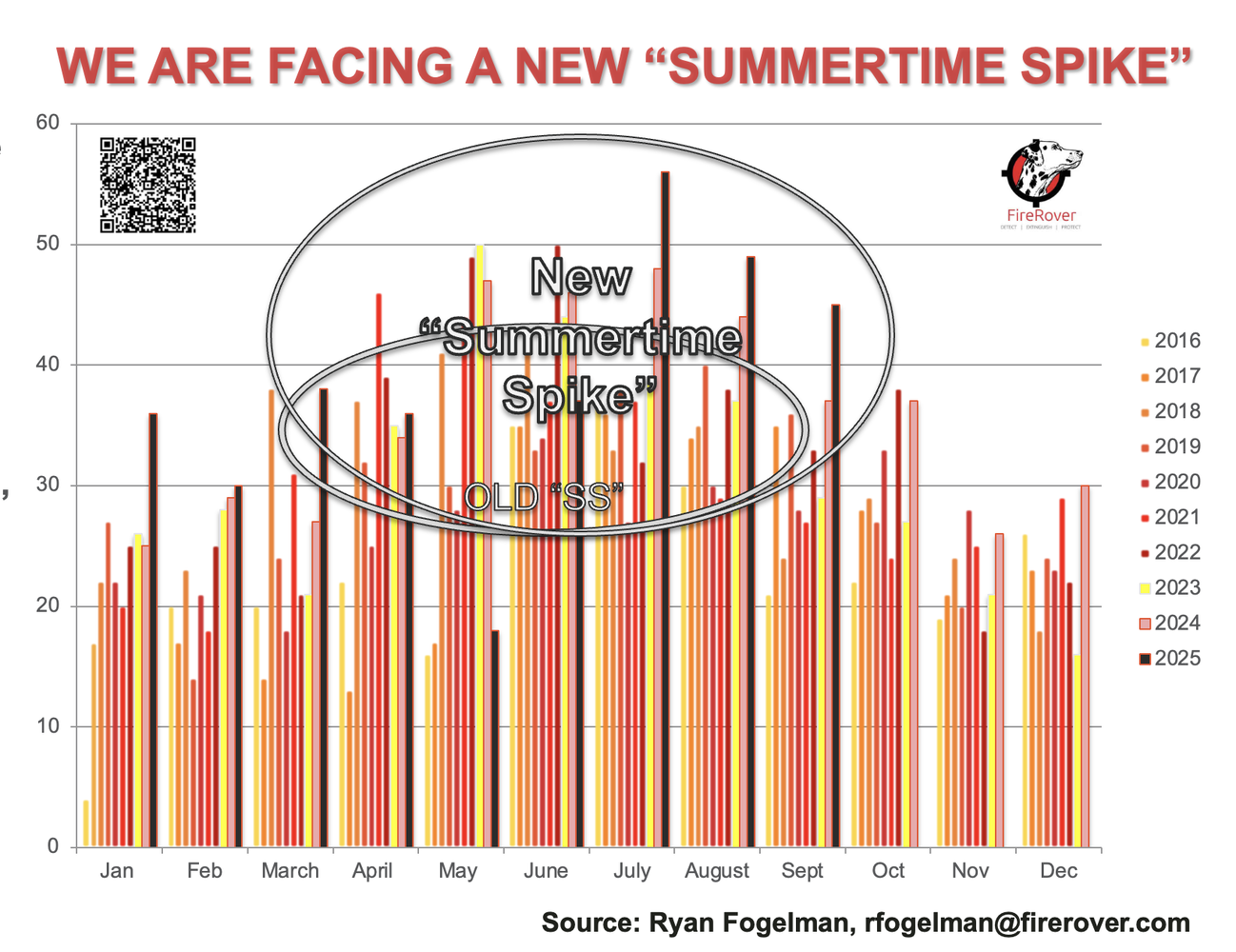
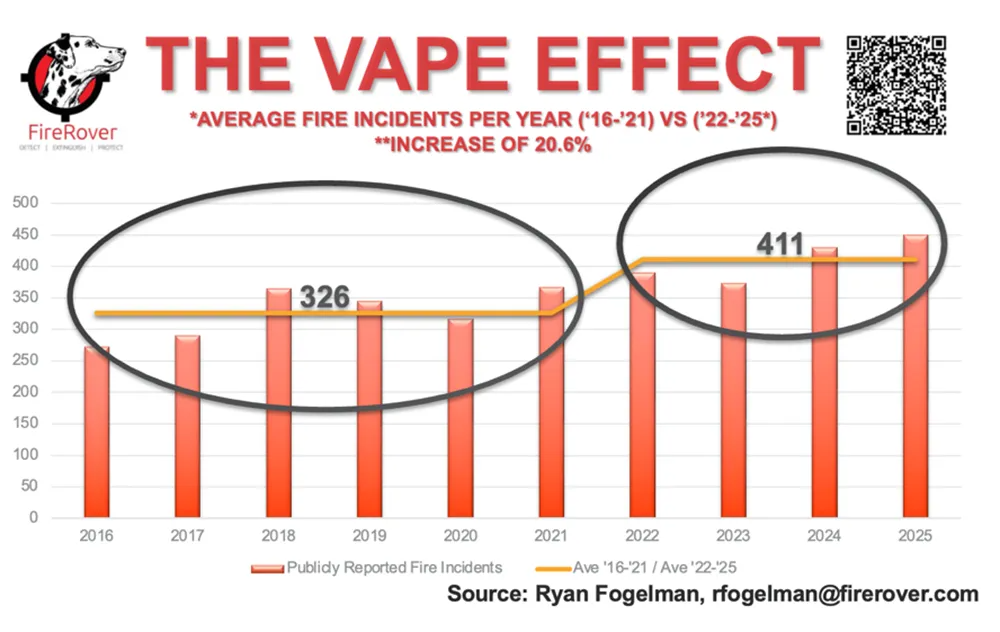
Years ago, I coined the term “summertime spike” to describe the seasonal uptick in fire incidents. But now, I believe we’ve reached a new risk baseline, which you can see in the chart above. The increased risk is no longer just in the summertime months; it’s pretty consistent throughout the year. I attribute much of this change to the “vape effect,” a rise in vape battery fires caused by the improper disposal of lithium-ion batteries, which we’ve seen grow significantly over the past four years.
As summertime comes to an end, it’s time to begin projecting our year-end totals based on year-to-date data. Looking at the current numbers, we’re estimated to reach 450 publicly reported fire incidents in the U.S. and Canada, a 5% increase compared to 2024.
Which Materials Are Driving the Increase?
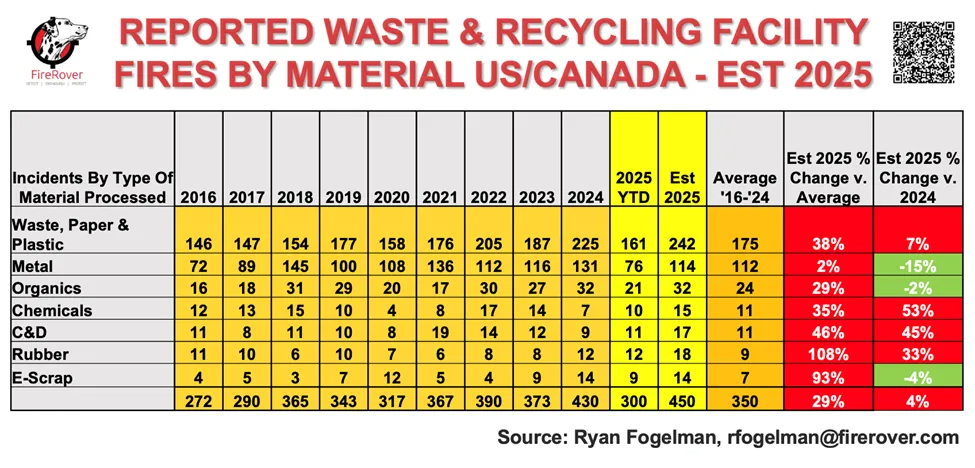
In the above analysis of the data thus far, I ran two sets of markers to understand the current trends.
Metal Recycling
The positive news is that publicly reported fires at metal recycling facilities (formerly referred to as scrap metal recycling facilities) only increased slightly in 2025 compared to the historical average and were down 15% compared to 2024. That said, fire incidents at these types of facilities have traditionally been higher in September and October, so only time will tell if this trend holds steady.
Encouragingly, more and more metal recyclers have invested in updated fire protection systems for their yards, which helps reduce the risk of large-scale fires that produce visible grey or black smoke and attract the attention of media and the public.
Watch the video below to see how our solution not only detects and begins suppressing the fire early but contacts the local water truck, operators and site personnel to quickly respond to the fire, keeping the black and gray smoke to a minimum.
Over the years, we’ve seen fluctuations in publicly reported fires at metal recycling facilities, with spikes in 2018, 2021 and 2024. Where we stand now, 2025 appears to be bucking that trend.
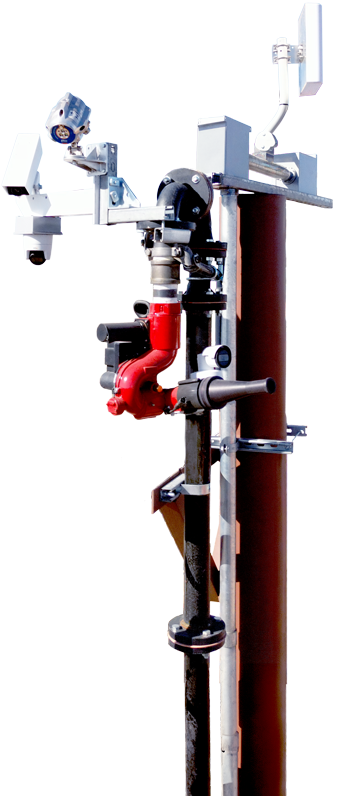
Continuous Suppression System
Eliminate threats before they spread. Our Continuous Suppression System provides nonstop, targeted suppression to keep fires from gaining ground and operations running safely.
Electronics and Organics
Publicly reported fires at electronics recycling facilities and organics operations are down slightly in 2025. However, more facilities have opened in North America in recent years, so incident counts are still high overall when compared to historical averages.
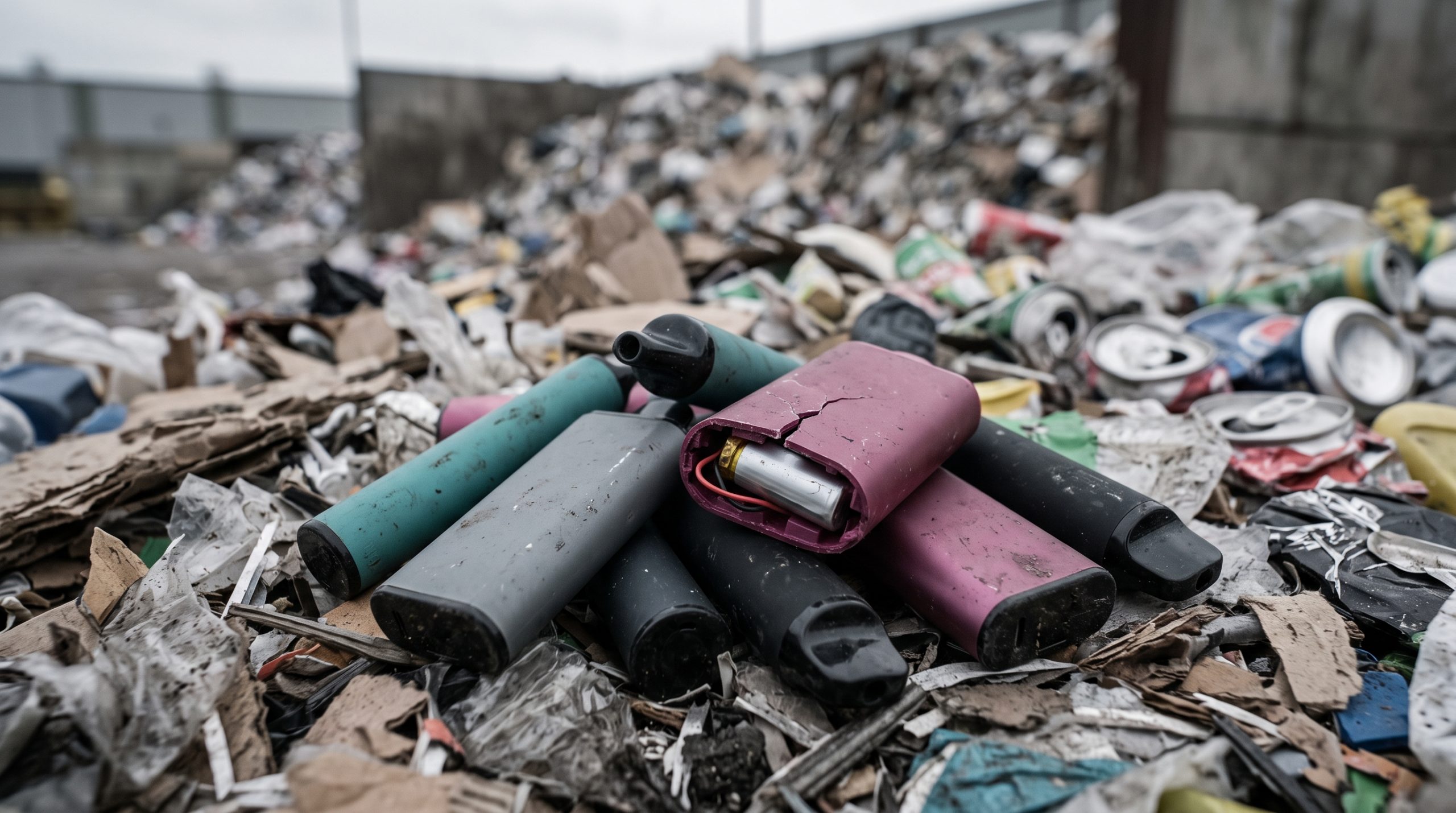
When looking at other material types, we’re seeing increases across the board, which is heavily due to one culprit: vapes.
Talk Fire Risk With Ryan
Ryan tracks fire incidents nationwide and helps facilities reduce risk with smarter detection and suppression strategies. Connect with him to get expert guidance tailored to your operation.
Understanding the Vape Effect
To summarize the vape effect, I used the help of AI, which stated:
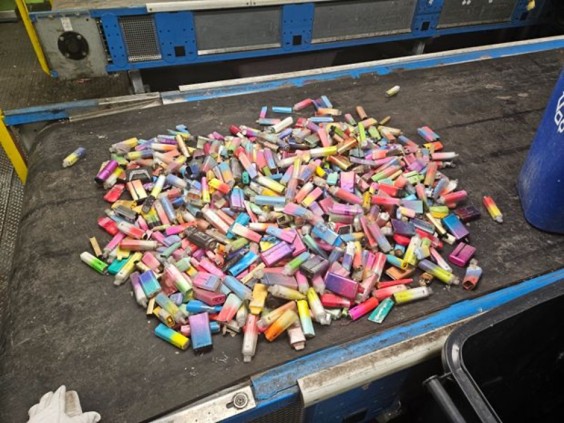
The “vape effect” is a term used by Ryan Fogelman to describe the alarming rise in waste and recycling facility fires, estimated to have caused $2.5 billion in damages in 2024. Improperly disposed of single-use vape batteries, which contain lithium-ion cells, are a primary cause of these fires. Fogelman’s reports highlight the immense scale of the problem, with an estimated 1.2 billion single-use vapes contributing to this crisis by ending up in waste streams without proper disposal options.
I coined the term “vape effect” to describe the rising number of lithium-ion batteries entering nearly all waste and recycling facilities globally. The reality is an estimated 1.2 billion single-use vapes will continue to increase every year as more adults over the age of 21 make the switch from traditional cigarettes to vapes.
Manufacturers are now pushing for more “disposable vapes,” even going as far as using the term “daily disposable” when marketing to customers. As mentioned in previous articles, we need to provide convenient and safe drop-off locations for these products as well as educate our nation’s youth and their parents about the importance of properly disposing of lithium-ion batteries.
How Is the Industry Responding to Vape Battery Fires?
Industry operators across the globe are continuing to acknowledge this growing problem. For example, in the UK, waste management company Biffa has called on the UK government to introduce curbside collection programs for disposable vapes, following a surge in waste and recycling facility fires caused by batteries and other waste electrical and electronic equipment. This comes after the UK government banned disposable vapes, only to be outmaneuvered by vape manufacturers that quickly developed “non-disposable” disposable vapes as an alternative option.
Interplas Insights reported the scale of that gap. A nationwide ban on the sale of disposable vapes took effect in the UK on June 1. Biffa still recorded a 7% increase in incorrectly disposed vapes across its UK material recovery sites in June and July, and a 24% surge in Teesside, where 232,500 of the now-outlawed vapes went into recycling bins rather than proper disposal points. Biffa chief operating officer Maxine Mayhew described a growing epidemic of battery-related fires in bin lorries and at waste management facilities that threatens lives, communities, infrastructure and the environment, and put the cost to the waste industry at £1 billion a year. She noted that vape popularity has climbed faster than disposal behaviour, and attributed much of that gap to how few people recognize the fire hazard a hidden lithium battery carries even when it appears to have run out of charge.
Once we have safe drop-off locations, it’s then time to educate. Check out the National Waste & Recycling Association’s newest marketing initiative through Battery Safety Now featuring Woodsy Owl. Known for his “Give a Hoot, Don’t Pollute” slogan, he’s now urging consumers to “Skip the Bin, Turn Your Batteries In!” in an effort to keep batteries out of waste and recycling bins.

It’s clear that the vape effect is contributing to a nearly 20.6% increase in publicly reported fires when comparing 2016-2021 data to 2022-2025 data and unless we get more of these batteries out of our bins, trucks, shredders, in-feeds and more, those numbers could get worse.
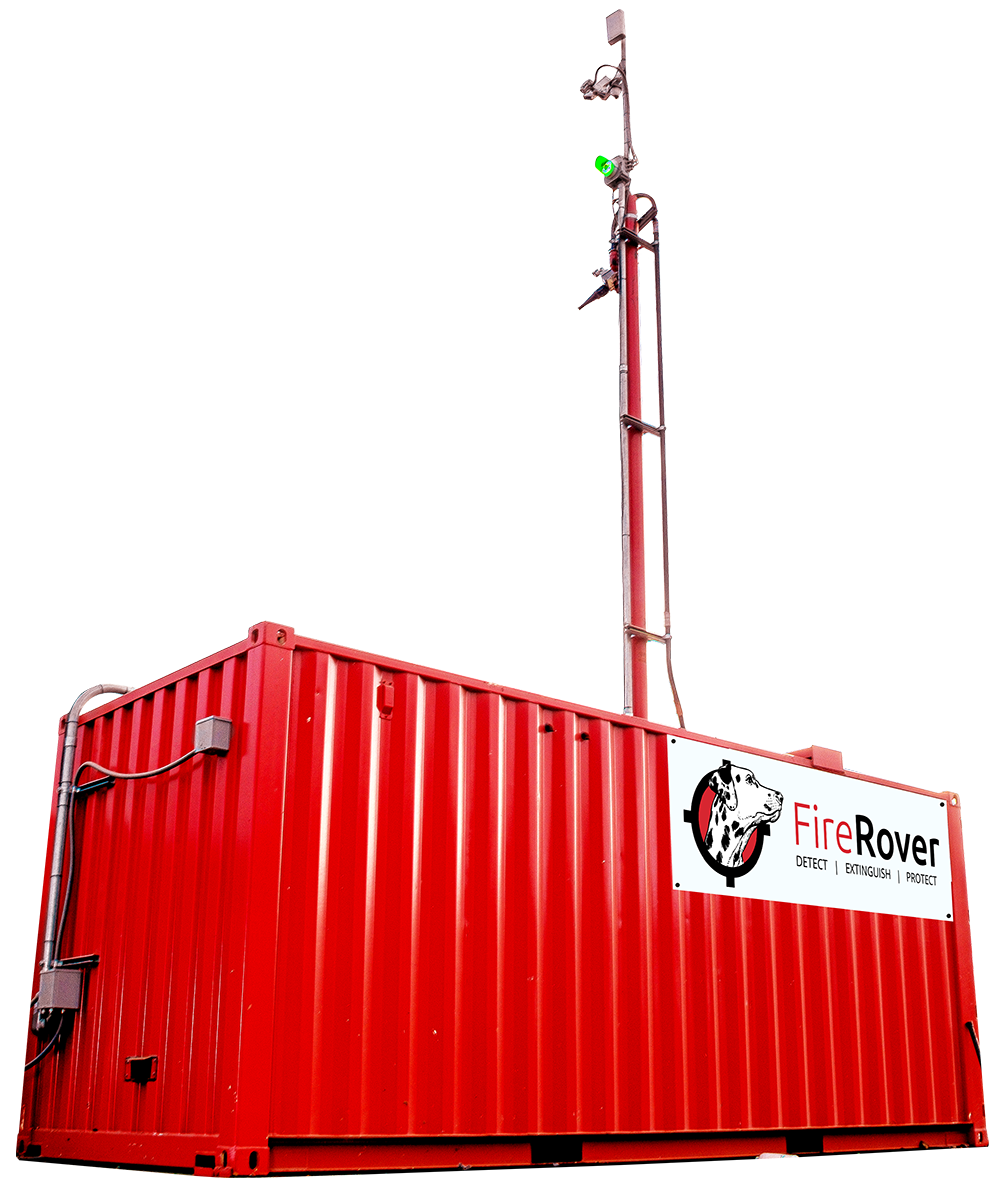
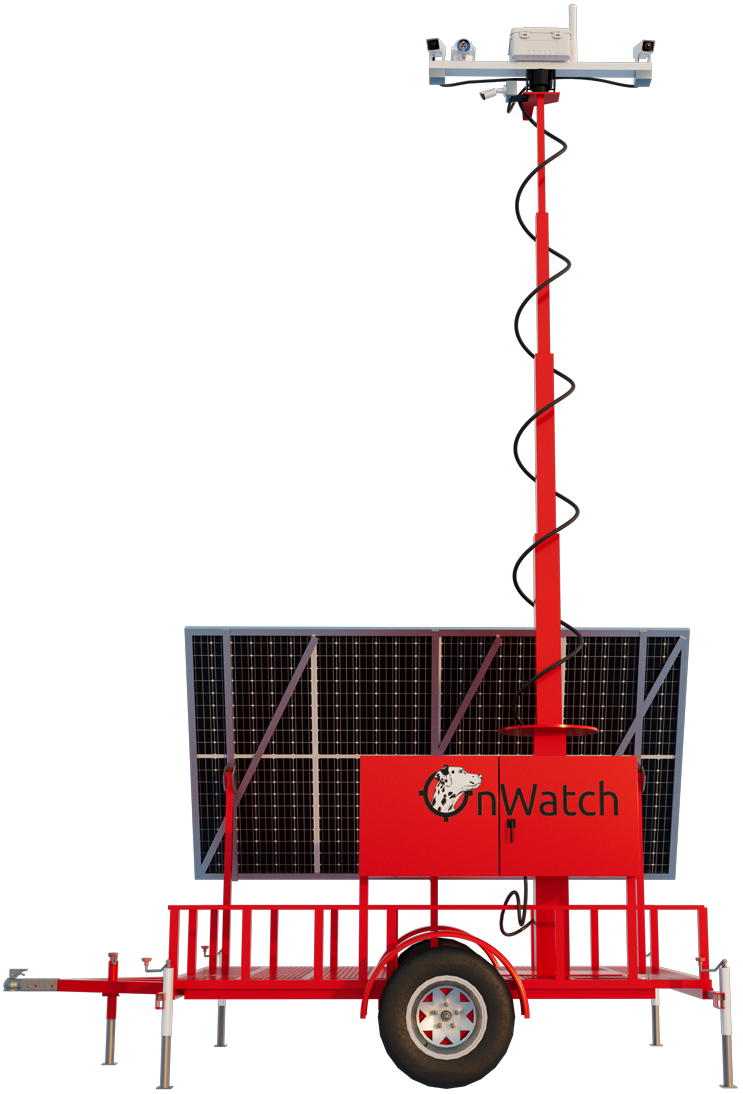
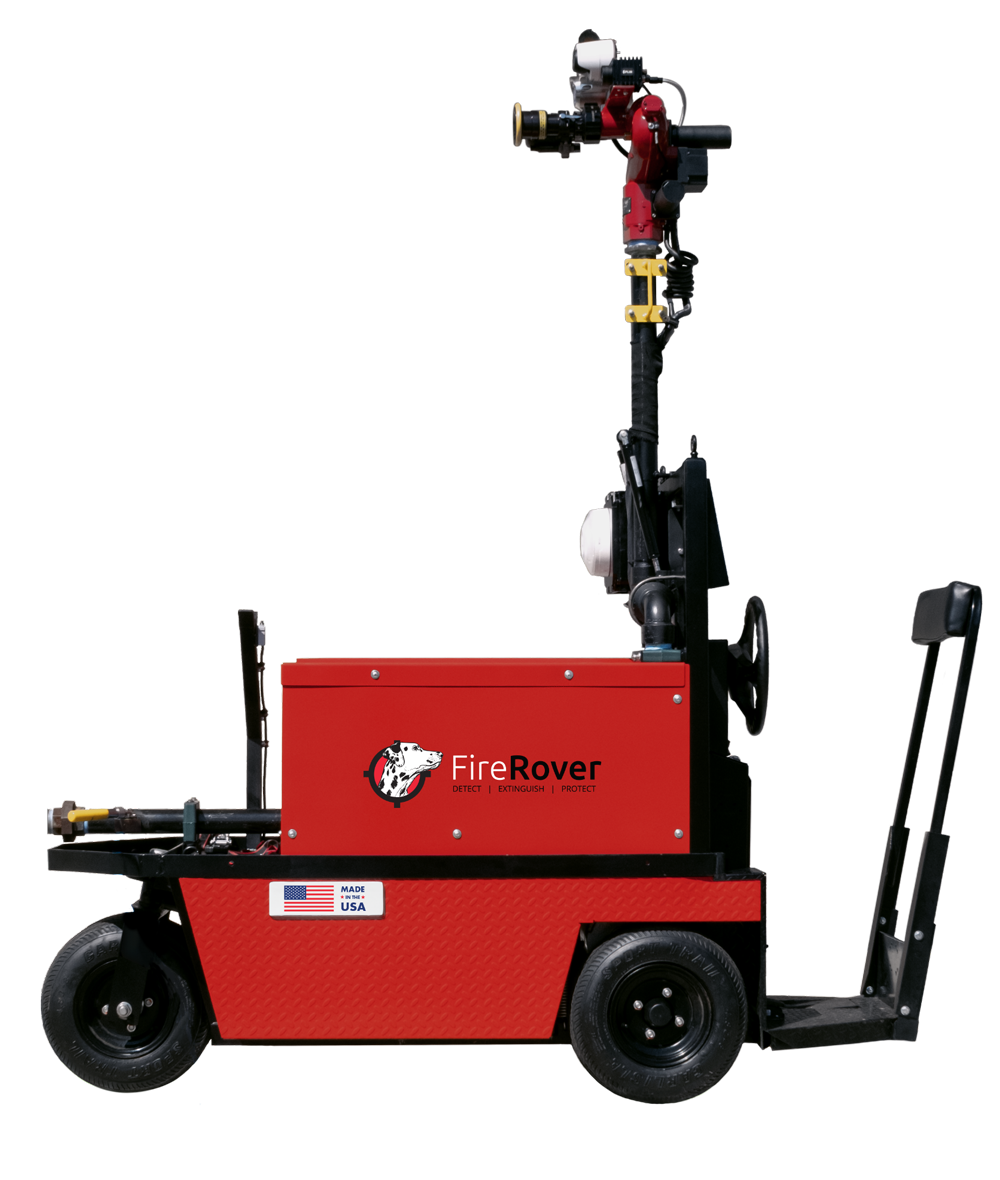
Even with fire prevention technologies like our Fire Rover solution, which currently protects nearly 800 sites across the U.S. and Canada, education and safe drop-off locations are needed to collect enough batteries to move the needle on facility fire incidents.
Get Ahead of Vape Battery Fires at Your Facility
The batteries arriving on your tip floor were never sorted for you. Until drop-off programs and consumer education catch up with the volume, vape battery fires stay a live possibility in every load, and the window between a hot spot and a reportable incident stays short.
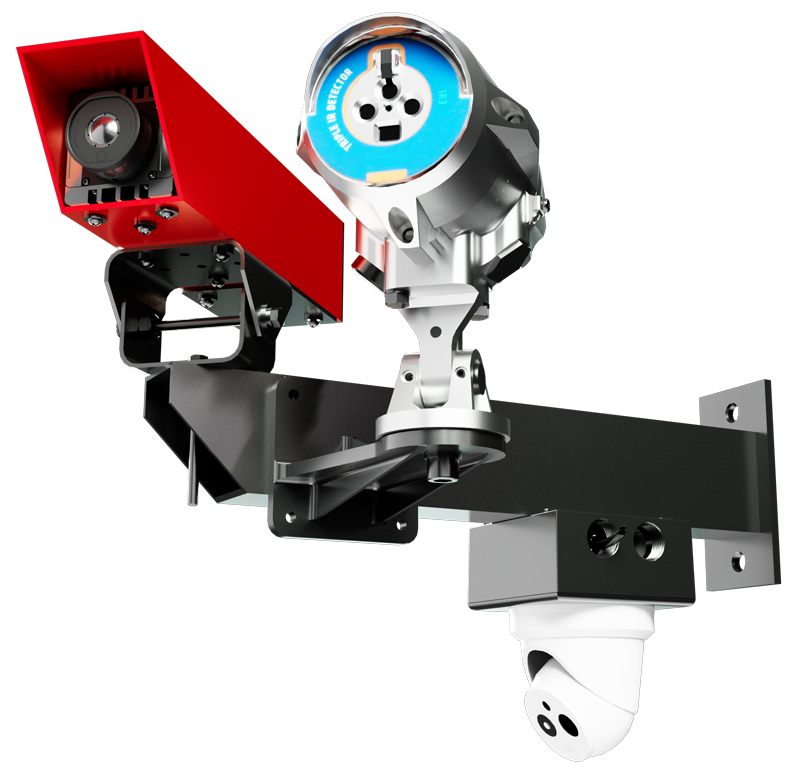
Fire Rover’s Continuous Suppression System pairs thermal and optical detection with trained operators who verify what the cameras see and begin cooling the area while your team responds. Contact our team to see how continuous suppression fits alongside the fire protection already in place at your site.
Related Articles
The Anatomy of an Electronics Recycling Fire
September 2026 Fire Report: The Extended Summertime Spike, the Vape Effect and a First Sign of Progress