







As published in Waste360, where it was the #1 top story in This Week In Waste for the week of Oct. 13.
Originally published October 2025
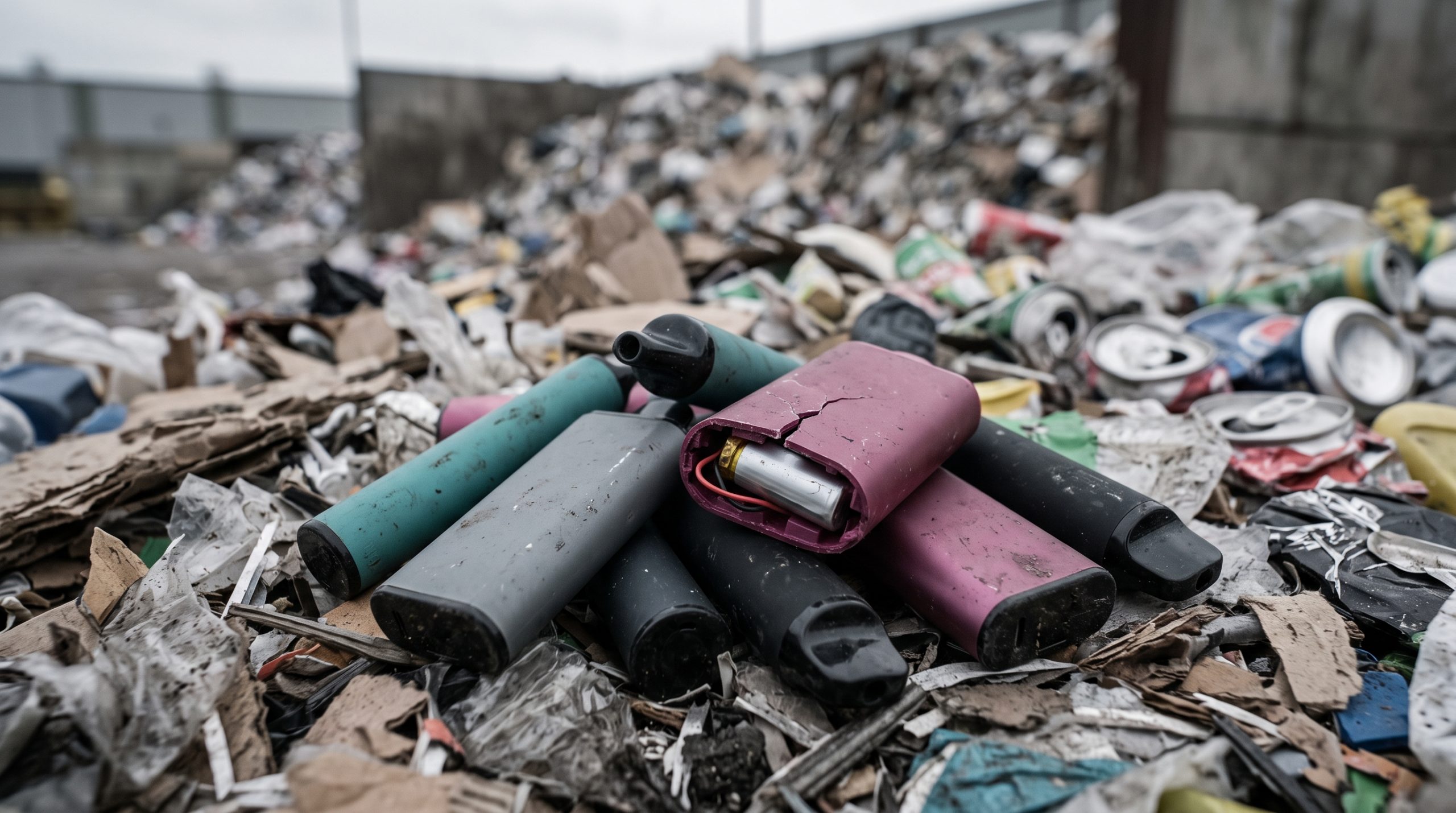
As we head into fall, waste and recycling facility fires continue to rise globally. In the U.S. and Canada, September reached a record high for incidents, following on the heels of July and August, which also set records. This data underscores a growing, concerning trend: fires caused by improperly discarded personal storage devices or electronics containing lithium-ion batteries.
With nine months of 2025 under our belts, I dive into the estimated year-end numbers in this month’s column. Unfortunately, 2025 is trending to be the worst year for fire incidents since I began consolidating and analyzing our data. I also dig into X-ray technology for detecting battery manufacturing defects and why some battery brands are safer than others.
September 2025 Recycling Facility Fires Set Another Monthly Record
The first half of 2025 set new and unfortunate records. It was the worst start to a year since I began tracking and reporting data on waste and recycling facility fires in 2016.
July’s 56 fire incidents marked not only the highest number on record for that month but also the highest single-month total for publicly reported fire incidents in the past 10 years. August also reached a new monthly high, with 49 reported fire incidents. September then followed suit, setting yet another monthly record with 45 reported fires. This data reveals the traditional “summertime spike” in fire incidents is not only worsening but extending deeper into fall.
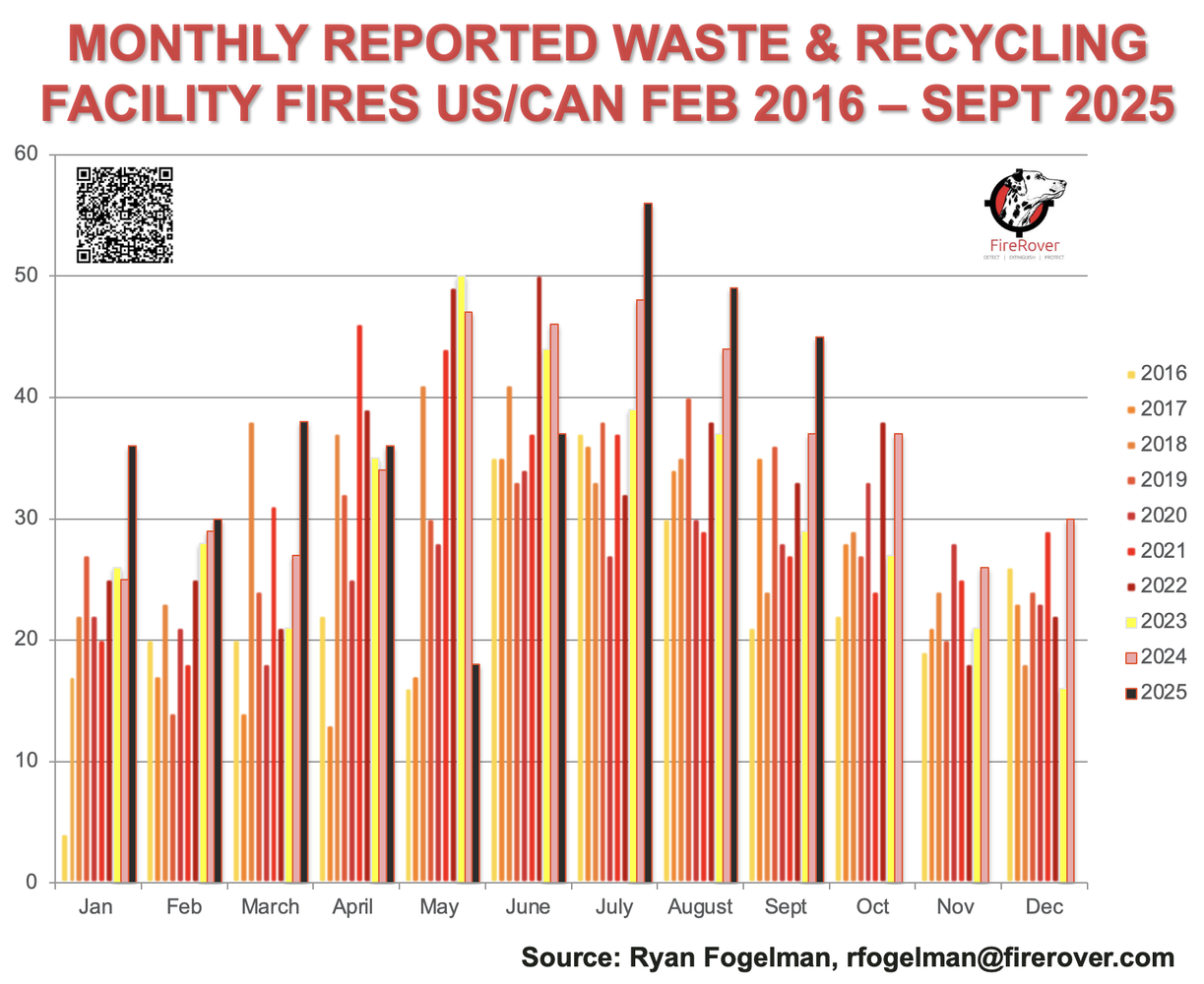
Monthly Reported Waste & Recycling Facility Fires US/CAN Feb 2016-Sept 2025, Ryan Fogelman, rfogelman@firerover.com
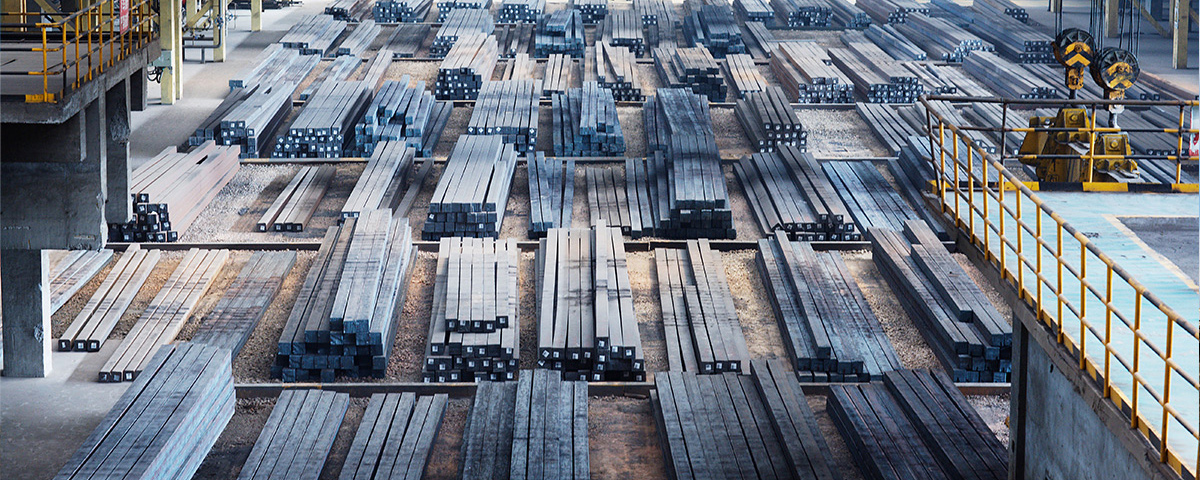
Of those 45 incidents, we saw a reversal in the number of fires by material type. Scrap metal recycling yards experienced the most, with 21 publicly reported fires. Waste, paper and plastics facilities followed with 17 incidents. Organics facilities reported three, electronics recycling facilities reported two and one each occurred at a construction and demolition operation and a rubber recycling yard.
The pattern we’ve seen over the past three months indicates fires during the summertime period are increasing in both frequency and duration. Traditionally, the summertime spike occurred from May through August. However, as shown in the graph above, incidents are now continuing through September and, in some years, beginning earlier than May.
Scrap Metal Recycling Yards Well Above Their Historical Share
We also saw a higher-than-average number of fires in scrap metal recycling yards in September. These fires accounted for nearly 49 percent of all incidents, which is much higher than the historical average of about 30 percent. To put that into perspective, of the 3,496 publicly reported recycling facility fires to date, 1,107 occurred at scrap metal recycling yards. I have seen this increase in prior years, so it may be a trend worth watching as it might be connected to the changing temperatures as metal facilities transition from the warm spring and summer months to the cooler fall and winter months.
Why Is the Summertime Spike Extending Into Fall?
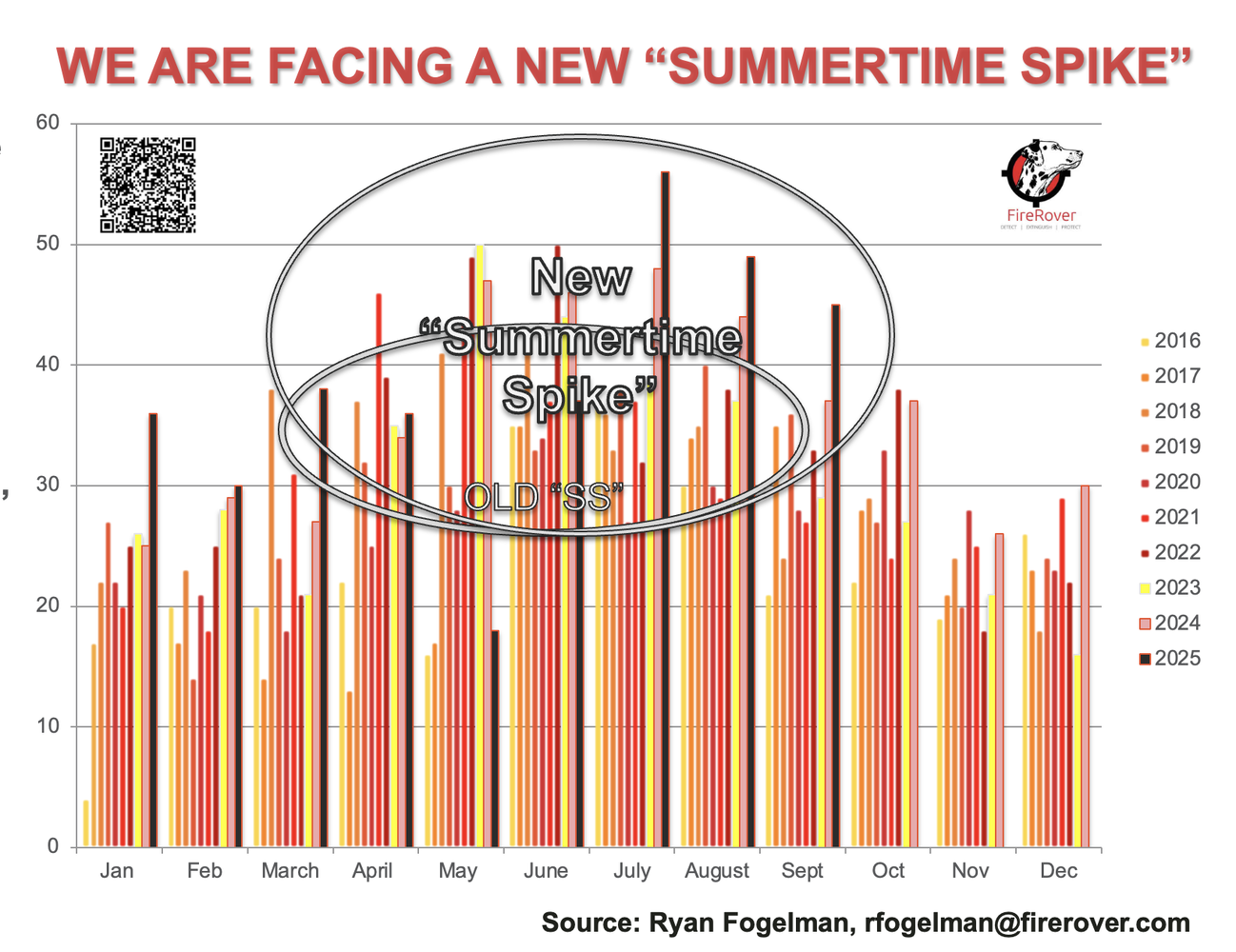
In my last annual report, I examined weather patterns and found increased heat and dryness across the U.S. and Canada for all waste and recycling operations, as they continue to contribute to more fires. I plan to look further into this issue for my 2025 annual report, publishing in March 2026.
What Do the Numbers Mean for Recycling Facility Fires in 2025?
So, what does it all mean for 2025?
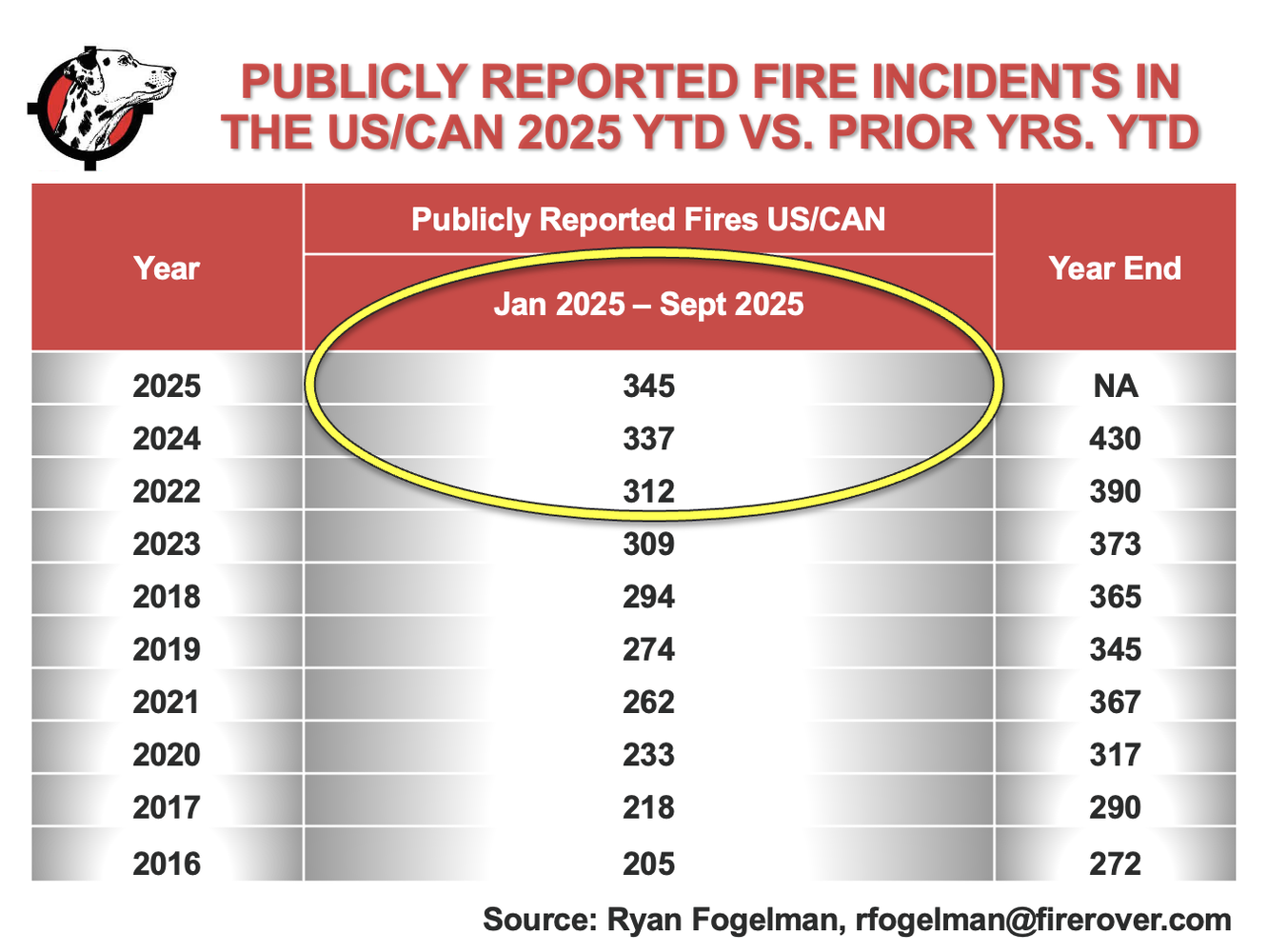
Based on year-to-date data, we’ve made up for a light spring and are entering the final quarter of the year at a record-breaking pace.
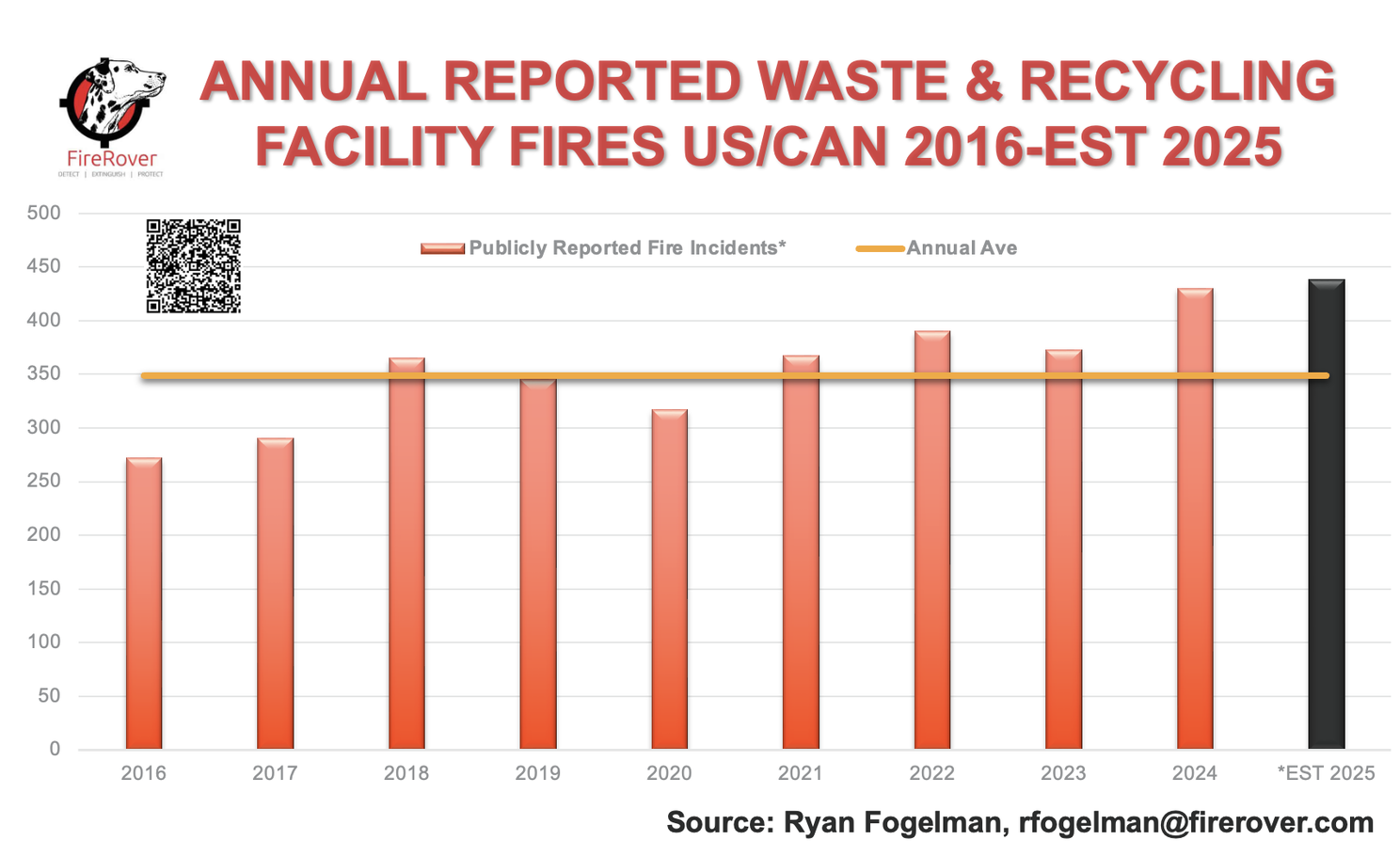
Using conservative projections for the fourth quarter, we’re on track to surpass last year’s record number of recycling facility fires. The silver lining is the projected increase appears to only be a slight uptick compared to last year’s record-breaking total.
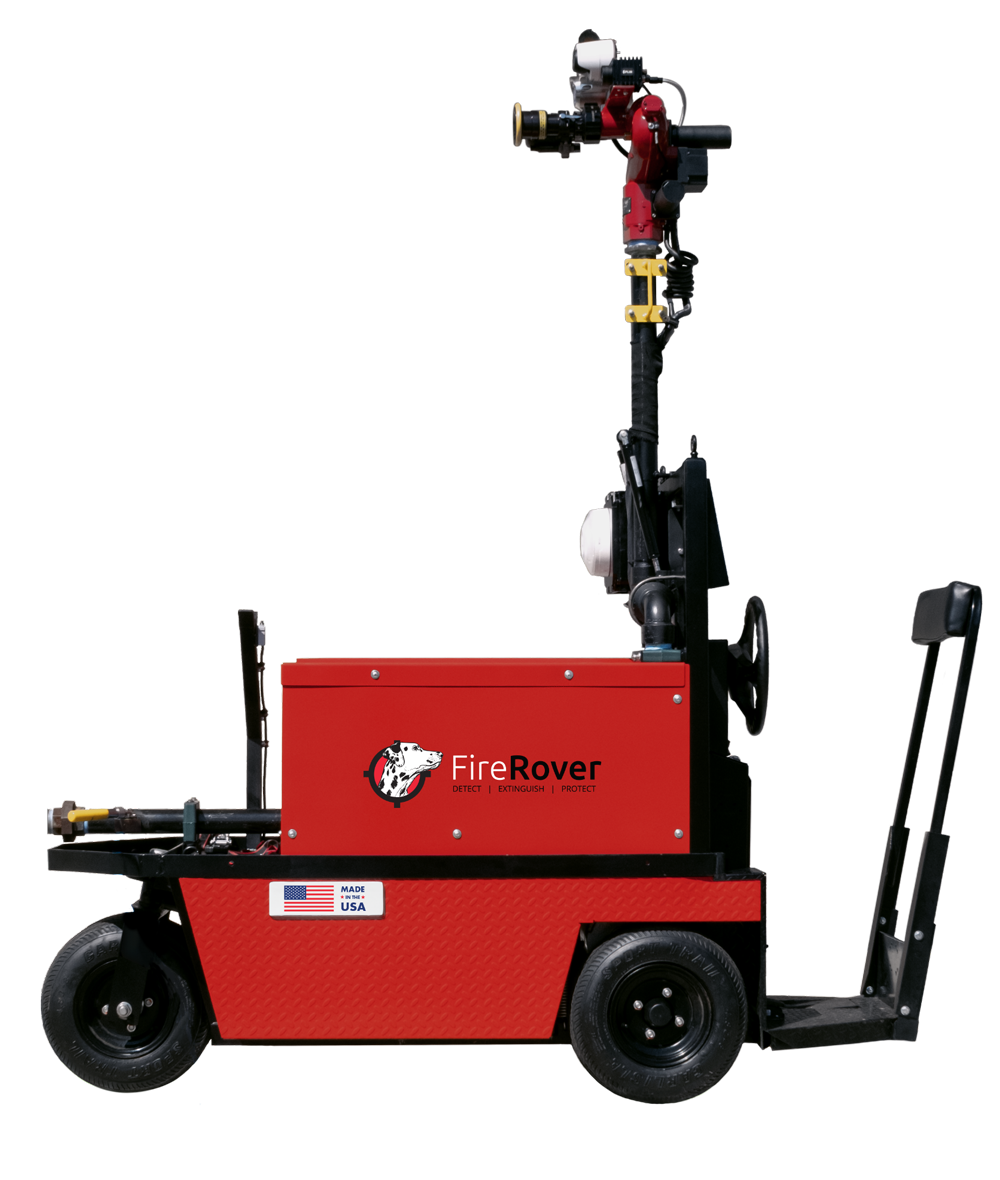
At Fire Rover, we’ve already suppressed more fires at client facilities in 2025 than all of 2024. We’re currently on pace to suppress close to 500 incidents globally this year, up from 268 in 2024. Check out our three-and-a-half-year key performance dashboard that I shared in August’s article.
Talk Fire Risk With Ryan
Ryan tracks fire incidents nationwide and helps facilities reduce risk with smarter detection and suppression strategies. Connect with him to get expert guidance tailored to your operation.
Can X-ray Scans Reveal the Hidden Risks of Cheap Batteries?
While attending the North American Battery Recycling Show in Detroit earlier this month, I had the opportunity to review the findings of Lumafield’s recent “Battery Quality Report” and experience firsthand the computed tomography (CT) scanning technology behind it. Using CT scanners, researchers analyzed more than 1,000 lithium-ion batteries available to the public both in stores and online and found there’s an “enormous gap in quality between brand-name batteries and low-cost cells” that are readily available through online stores including Amazon and Temu. Check the video out here
These scans revealed dangerous manufacturing defects in low-cost and counterfeit batteries that could potentially lead to fires or explosions. While most major original equipment manufacturer (OEM) batteries showed few major flaws, the rewrapped and low-cost batteries showed seven times greater deviation in anode overhang and much worse edge alignment in their internal wound layers. The batteries with worse edge alignments were found to have an increased risk of short circuits and performance loss.
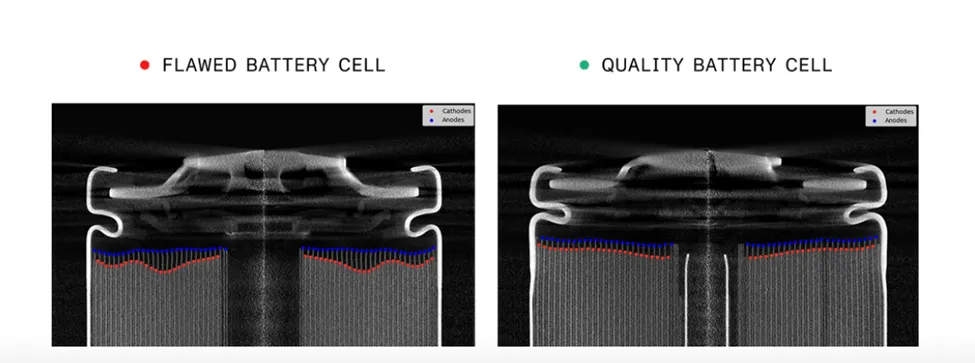
Flawed Battery Cell As Compared With Quality Battery Cell
What Manufacturing Defects Mean for Waste and Recycling Operations
To be clear, these manufacturing flaws don’t mean an affected battery will fail or catch fire. However, as with most products that are not assembled using industry best practices, these batteries are more likely to experience issues, particularly when exposed to the extreme conditions common in waste and recycling operations, where materials are repeatedly pushed, pulled, run over, compacted and exposed to varying temperatures and environments.
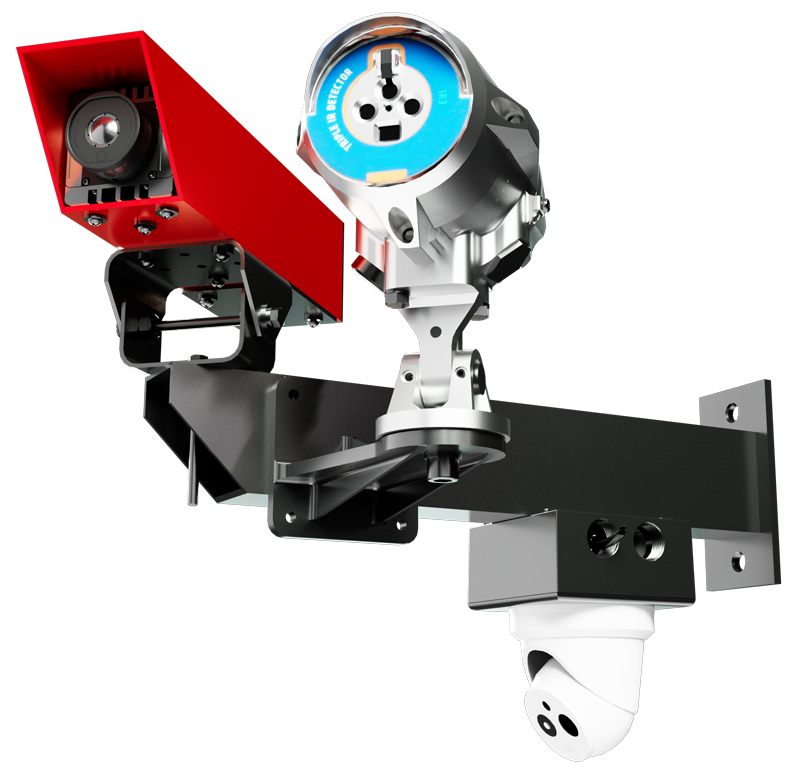
Early Detection System
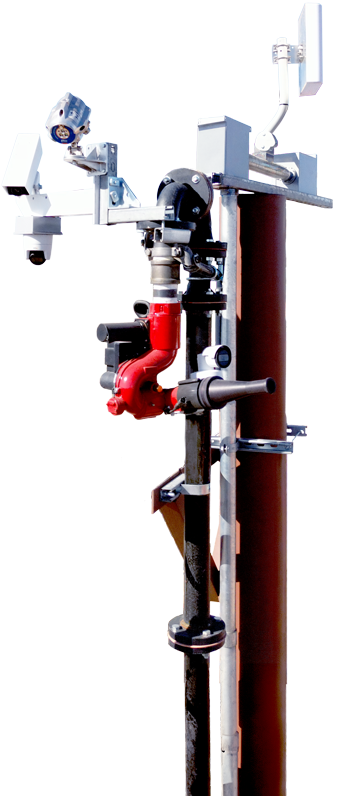
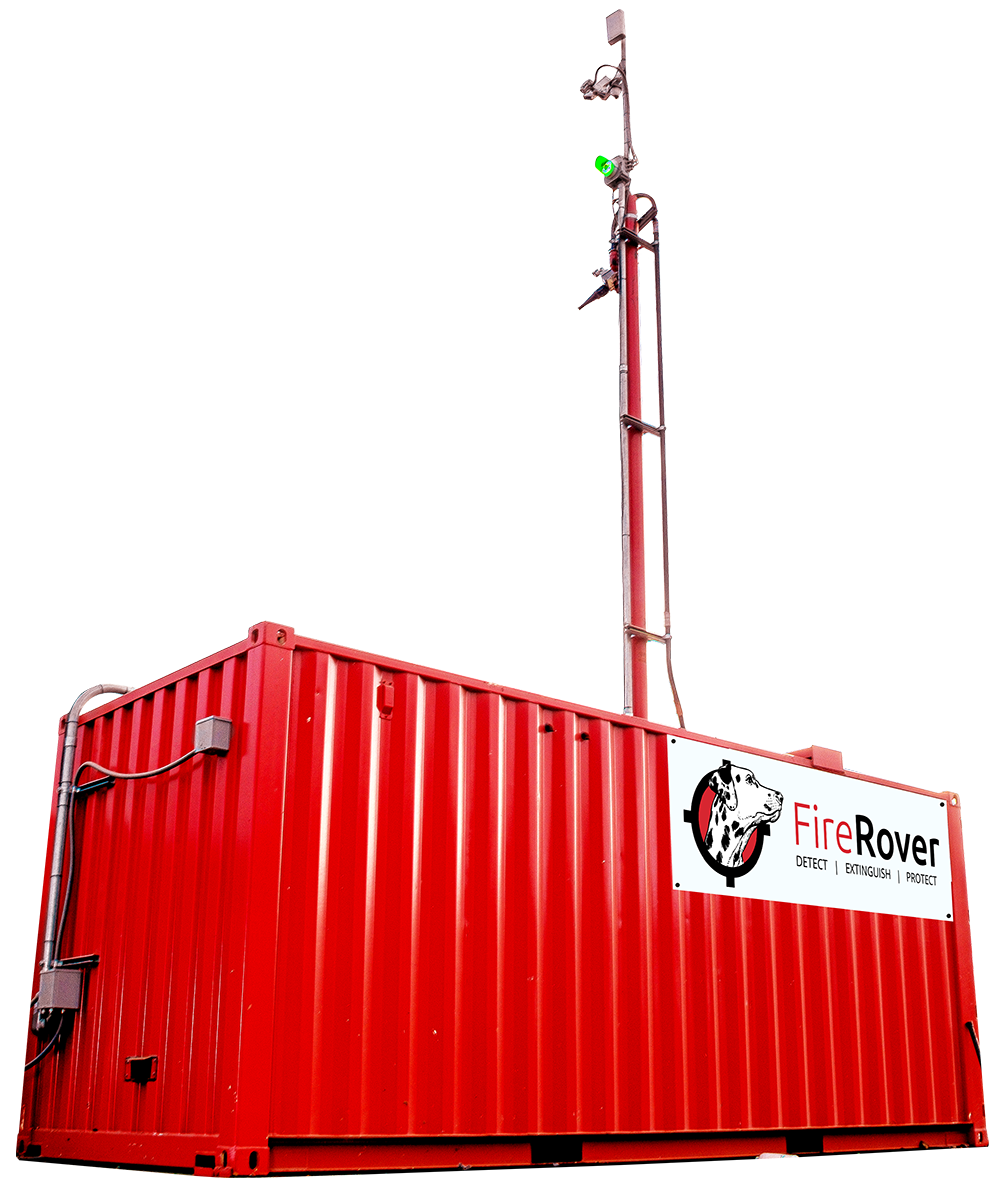
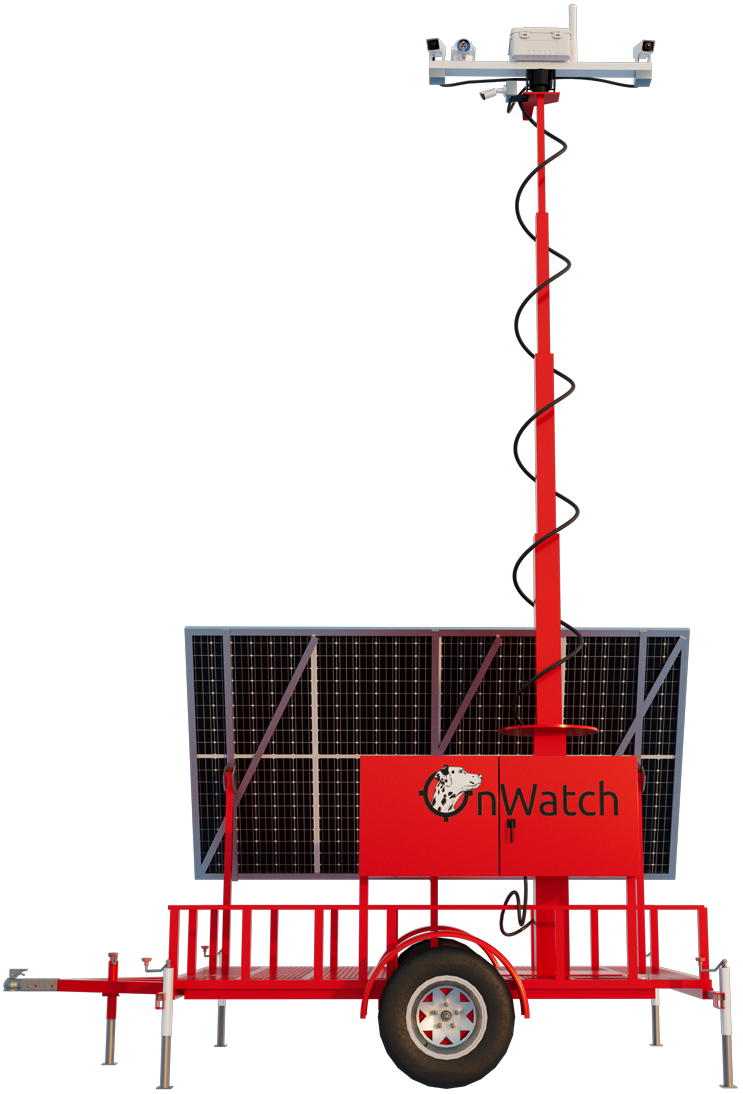
Don’t wait for smoke and flames. Fire Rover’s Early Detection System uses thermal cameras and human verification to spot fire threats instantly and dispatch emergency services quickly.
How Everyone Can Reduce Lithium-ion Battery Risks
These new findings further highlight the importance of battery collection and recycling programs, which provide safe drop-off locations where batteries can be properly recycled and their rare earth metals can be properly recovered.
We all need to do our part to avoid contributing to the lithium-ion battery challenges the waste and recycling industry faces daily. The reality is that most of us will likely purchase or own a lower-quality battery, whether intentionally or unintentionally, but there are actions we can take to reduce risks. These include bringing batteries to designated drop-off locations for proper recycling, ensuring electronics aren’t exposed to extreme temperatures, avoiding overcharging and charging devices in locations away from combustible material and accelerants.
Catch Recycling Facility Fires Before They Spread
Every battery that reaches a tipping floor, baler or shredder carries a manufacturing history no one on site can see. As incident counts climb and the high-risk season stretches deeper into the year, the first minutes of a thermal event decide whether it stays a minor incident.
Fire Rover’s Early Detection System combines thermal, flame, and smoke analytics to identify fire risks before they spread, giving site teams time to respond while an event is still small. Contact our team to see how early detection fits your facility’s layout and material streams.
Related Articles
The Anatomy of an Electronics Recycling Fire
September 2026 Fire Report: The Extended Summertime Spike, the Vape Effect and a First Sign of Progress